
Launching a new skincare product is exciting, but scaling it efficiently is often the hidden hurdle. Many brands focus on aesthetics, trends, or quick launches, only to struggle when demand grows. This is where scale ready skincare separates brands built for momentum from those forced into costly corrections later.
From ingredient instability to variable batches and regulatory roadblocks. Scaling challenges usually surface after launch, when fixing them becomes expensive and time-consuming. Market analyses suggest that nearly 70 percent of new beauty products fail to scale successfully due to formulation or manufacturing challenges, not marketing gaps.
At Beaucience, we see this pattern repeatedly while working with founders and brand teams across growth stages. In our experience as a private label and R&D-led manufacturing partner, scalability issues are rarely accidental. They are the result of early decisions made without long-term production, compliance, and consistency in mind.

This is where scale ready skincare becomes a strategic advantage rather than an operational afterthought. By aligning skincare product design, formulation discipline, manufacturing readiness, and launch planning from day one, brands can protect quality, enable smoother growth, and build lasting consumer trust. This article explains how to design everyday skincare products that scale confidently, from concept to market expansion, without compromising effectiveness or compliance.
Also Read:
- CC Sunscreen Formulation Science: How Hybrid Sun Care Is Evolving
- Third Party Manufacturing 2026: The New Rules for Beauty Brands
Laying the Foundation with Skincare Product Design
Building scale ready skincare begins long before manufacturing starts. It takes shape at the design table, where early decisions determine whether a product can grow smoothly or struggle under demand. Thoughtful skincare product development ensures formulation, packaging, and positioning remain stable as volumes increase.
Core Elements of Product Design That Enable Scale
Strong skincare product development depends on a few non-negotiable design fundamentals. These elements define whether a formula can move from lab to large-scale production without repeated corrections or quality drift.
Before locking any formulation, brands must evaluate the following:
- Target audience alignment: Clear understanding of skin concerns, usage habits, and price sensitivity before finalising the formula.
- Ingredient selection: Use actives that are stable, globally available, and proven to perform consistently at scale.
- Formulation simplicity: Avoid overly complex systems that increase failure risk during large-batch manufacturing.
These fundamentals reduce instability, minimise reformulation, and support a predictable skincare manufacturing process as demand grows.
Design Best Practices for Scalable Growth
Scalable skincare formulation requires design decisions that anticipate future growth rather than react to it. Design choices should support automation, expansion, and regulatory continuity.
Key scalability-focused practices include:
- Modular formulas for variants: Build a strong base formula that supports future line extensions or regional variants.
- Packaging considerations for skincare: Select containers compatible with automated filling, transport efficiency, and sustainability goals.
- Regulatory compliance for cosmetics: Design with CDSCO, FDA, and ISO requirements in mind to prevent approval delays later.
These practices are especially critical in private label skincare manufacturing, where scale, compliance, and speed must align without compromise.
Well-planned skincare product design reduces reformulation costs, accelerates approvals, and preserves a consistent consumer experience as volumes increase. Brands that treat design as a scalability tool rather than a visual exercise are better positioned for long-term success in scale ready skincare.
Formulation to Production Workflow for Scalability
An efficient formulation to production workflow is critical to turning lab success into commercial reality. Many brands underestimate how easily promising formulas can fail during scale-up. Without planning for volume, consistency, and compliance, skincare product development often breaks down once production pressure increases.
Building a Scalable Formulation to Production Workflow
A scalable skincare formulation depends on discipline across formulation and manufacturing stages. Each step must support consistency, repeatability, and regulatory readiness as volumes grow.
The following elements form the backbone of a reliable workflow:
- Raw material procurement: Partner with suppliers who can maintain uniform quality across increasing order volumes.
- Stability testing: Validate performance across temperature variations, time, and batch sizes to avoid late-stage failures.
- Clinical validation: Scientifically tested products build credibility and reduce reformulation risk.
- Batch consistency: Define parameters to maintain uniform texture, pH, and performance across runs.
- Lean production techniques: Reduce waste while improving efficiency during scale-up.
- Equipment compatibility: Ensure formulations perform consistently with scalable manufacturing machinery.
- Documentation of protocols: Maintain traceability and quality control throughout the skincare manufacturing process.
When these elements are addressed early, private label skincare manufacturing becomes predictable rather than reactive.

Why do effective formulas fail during scale-up?
Most failures occur when workflows are built for small batches instead of future demand. Skipping pilot testing, rushing supplier selection, or underestimating equipment constraints introduces variability that compounds with scale. Structured workflows identify these risks early and prevent costly corrections later.
Integrating disciplined workflow planning into skincare product development protects quality, ensures compliance, and supports cost efficiency. A well-planned formulation to production workflow is not an operational detail. It is a core requirement for building scale ready skincare that performs consistently in the market.
Scaling Skincare Brand Without Jeopardizing Quality
Growth brings complexity. As order volumes increase, sustaining product integrity becomes one of the most critical challenges when scaling skincare brand operations. What performs well at small volumes can quickly unravel if sourcing, controls, and systems are not designed for expansion.
Managing Growth While Protecting Quality
When scaling skincare brand operations, pressure typically builds across three areas. Supply chains are stretched, product efficacy is harder to maintain, and regulatory expectations increase as volumes and markets expand. Each of these factors directly affects quality assurance in skincare.
The most common risks during scale-up include:
- Supply reliability: Growth demands consistent sourcing without compromising ingredient integrity.
- Product performance: Shortcuts taken to meet demand can weaken efficacy and damage consumer trust.
- Regulatory pressure: Expansion requires stricter adherence to regulatory compliance for cosmetics.
To scale without erosion, brands must shift from reactive execution to disciplined systems. Clear production KPIs help track batch consistency and defect rates. Partnering with experienced manufacturers reduces operational strain and improves decision quality. Future-proof formulations allow brands to introduce variants without destabilising the core product.
Operational maturity further supports sustainable growth. Selective automation reduces human error, while batch analytics highlight early warning signs before issues escalate. Structured consumer feedback loops ensure scaling decisions remain grounded in real-world performance.
Successful scaling skincare brand strategies prioritise discipline over speed. Brands that invest in systems, partnerships, and data scale with confidence while preserving quality, compliance, and long-term credibility.
Product Launch Strategy for Scale-Ready Skincare
A thoughtful product launch strategy ensures scale ready skincare can meet demand both at launch and during growth. Brands that rush to market without planning for volume, supply, and quality often face operational bottlenecks that are expensive to correct after traction begins.
Pre-Launch Planning That Supports Scale
Effective skincare product development starts with disciplined pre-launch preparation. Market research validates demand, competitive positioning, and pricing logic before production commitments are made. A controlled SKU strategy limits initial offerings, reducing complexity during early scale. Supply alignment ensures that ingredients and packaging materials are available consistently before launch timelines are locked.
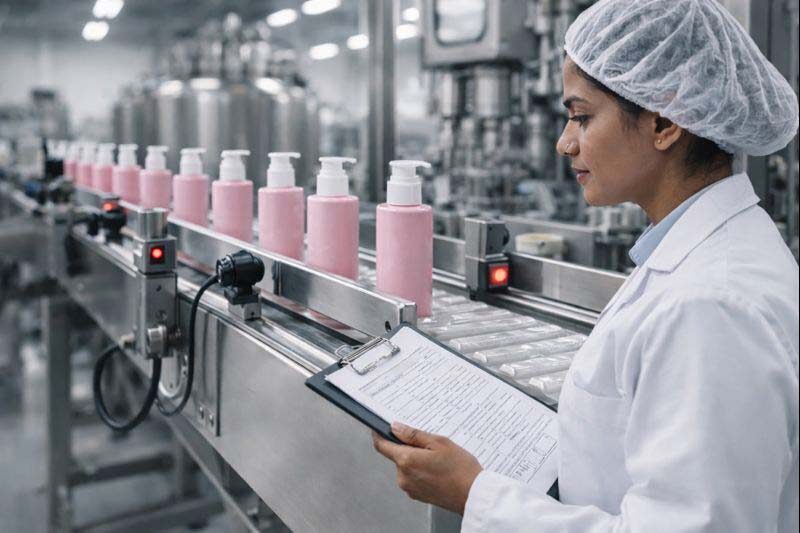
Executing the Launch Without Creating Bottlenecks
Launch execution determines whether early demand strengthens or strains operations. Batch size planning must match realistic demand forecasts rather than optimistic projections. Marketing alignment is equally important, ensuring claims and messaging accurately reflect formulation benefits. Post-launch monitoring allows brands to improve upcoming batches using real performance data instead of assumptions.
Managing Growth After the Launch
Scaling does not stop at launch day. A staggered rollout helps reduce supply chain pressure while maintaining availability. Consistent branding across channels builds trust as volumes increase. Performance tracking enables quick corrective action, protecting quality and supporting the skincare manufacturing process as demand grows.
A strong product launch strategy transforms skincare product development into a scalable, repeatable system. When production, marketing, and quality controls are aligned, brands reduce risk, maintain consistency, and build long-term credibility. Scale ready skincare launches are defined by control, not speed, enabling smoother growth and sustainable market success.
Ensuring Regulatory Compliance and Quality Control
Regulatory compliance and quality control are non-negotiable for long-term growth. As production volumes increase, weak systems turn scalability into a liability. For scale ready skincare, compliance discipline and process control must be embedded into the skincare manufacturing process from the start.
Compliance Essentials for Scalable Skincare
Regulatory compliance for cosmetics protects both the brand and the end consumer. Early alignment with global and local standards prevents costly delays during expansion, especially in private label skincare manufacturing.
Key compliance requirements include:
- Local and global standards: Adherence to CDSCO, FDA, and ISO frameworks across markets.
- Labelling transparency: Accurate ingredient disclosure and claims to avoid penalties and consumer distrust.
- Clinical documentation: Verified safety and efficacy data to support regulatory and commercial claims.
Quality Inspection Protocols That Support Scale
Quality control in skincare must function as an ongoing system, not a final checkpoint. Monitoring consistency throughout production helps brands maintain performance as volumes rise.
Critical inspection controls include:
- In-process monitoring: Ensures stability, texture, and pH consistency during production runs.
- Final product testing: Confirms microbiological safety before release.
- Audit and traceability: Maintains accountability across batches and suppliers.
How do QC best practices support long-term growth?
As brands scale, quality systems must evolve alongside production capacity. External validation and structured improvement cycles strengthen credibility and protect consistency.
Effective practices include third-party testing to enhance trust, routine batch sampling to detect issues early, and continuous improvement to refine processes over time.
Strong regulatory compliance for cosmetics combined with disciplined quality control in skincare forms the backbone of scalable skincare. Brands that invest in documentation, monitoring, and verification scale confidently while protecting reputation and consumer trust.
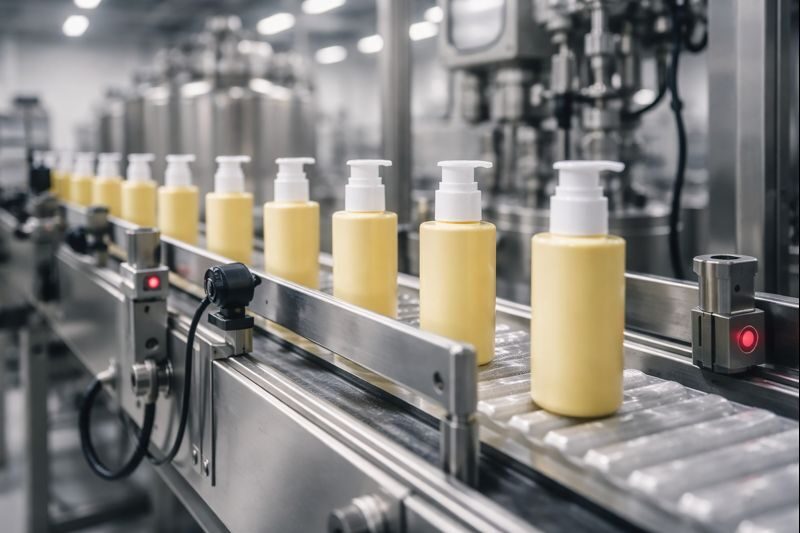
Mastering Scale-Ready Skincare: Start Smart, Grow Smarter
Scale ready skincare is not built overnight. It is shaped through deliberate choices across skincare product development, formulation discipline, manufacturing readiness, and launch planning. Brands that scale successfully do not rely on shortcuts. They invest early in systems that protect quality, compliance, and consistency as demand grows.
When design, formulation, and production operate as a connected system, scalability becomes predictable rather than reactive. This reduces reformulation risk, supports regulatory confidence, and strengthens long-term brand trust.
At Beaucience, this understanding comes from working across growth stages where early decisions quietly determine whether skincare brands scale smoothly or struggle later.

Our Digital Imprints:
Discover the power of personalized skincare with Beaucience India. We offer premium private label skincare products and services designed for established brands, physicians, estheticians, and skincare professionals.
Beaucience is dedicated to helping brands like yours thrive in the skincare market. If you’re ready to explore custom formulations that set your products apart, we invite you to reach out and learn more about our capabilities.
Our commitment to quality ensures exceptional results tailored to your needs. Stay updated with the latest trends and insights in the beauty and cosmetic industry by subscribing to our newsletter.
“Beauty Alchemist” on Beauty and Cosmetic Industry
Join our community on : Instagram | Facebook | LinkedIn
Transform your skincare vision with Beaucience India today!