
Most moisturisers are designed to manage dryness, not repair it. This is where skin barrier repair becomes critical. There is a clear formulation distinction between products that offer temporary softness and those that structurally rebuild the skin’s moisture-retention system.
As the demand for dry skin repair formulation grows, driven by post-procedure recovery, pollution exposure, over-exfoliation, and sensitive skin conditions, the focus has shifted toward barrier repair skincare systems that reduce trans epidermal water loss and restore the ceramide lipid matrix through structured formulation science.
At Beaucience India, skin barrier repair is approached as a formulation discipline, not a marketing claim. With advanced R&D, scalable manufacturing, and validated systems, formulations are engineered to deliver consistent, clinically aligned performance for private label brands operating in high-precision skincare categories.
The Skin Barrier Breakdown Problem That Impacts Skin Barrier Repair Outcomes
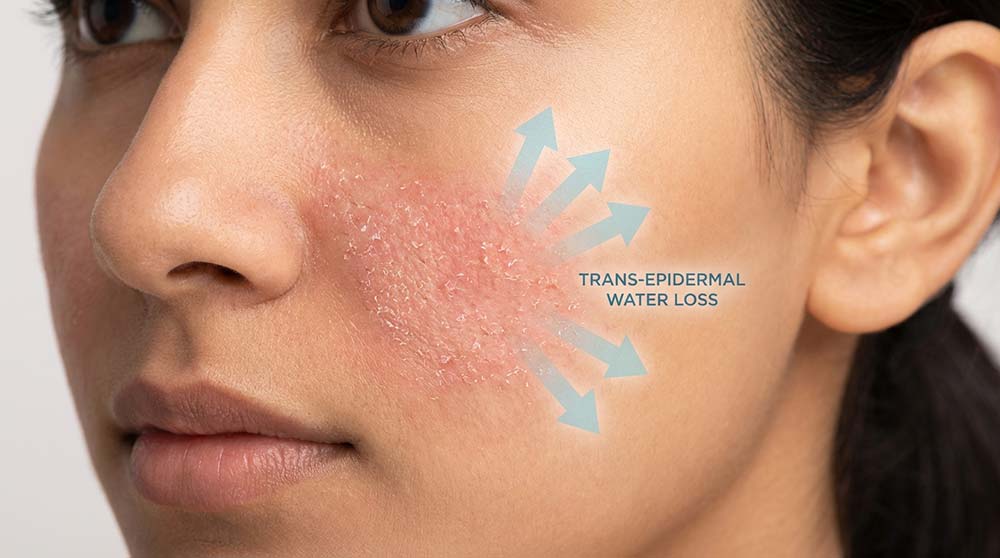
Skin barrier repair becomes critical when structural lipid damage increases trans epidermal water loss and weakens the skin’s natural defence system against environmental and internal stressors.
Skin barrier repair restores the ceramide lipid matrix and reduces trans epidermal water loss to rebuild the skin’s protective and hydration-retention function.
How Trans Epidermal Water Loss Accelerates Skin Barrier Damage
When trans epidermal water loss increases, the skin loses moisture faster than it can retain it. This weakens the ceramide lipid matrix and disrupts barrier function. Dry skin repair formulation focuses on reducing this loss at the source. Barrier repair skincare achieves this by reinforcing lipid layers, improving hydration retention, and stabilising the skin environment to prevent continuous damage cycles.
Why Standard Moisturisers Fail in Skin Barrier Repair Formulation
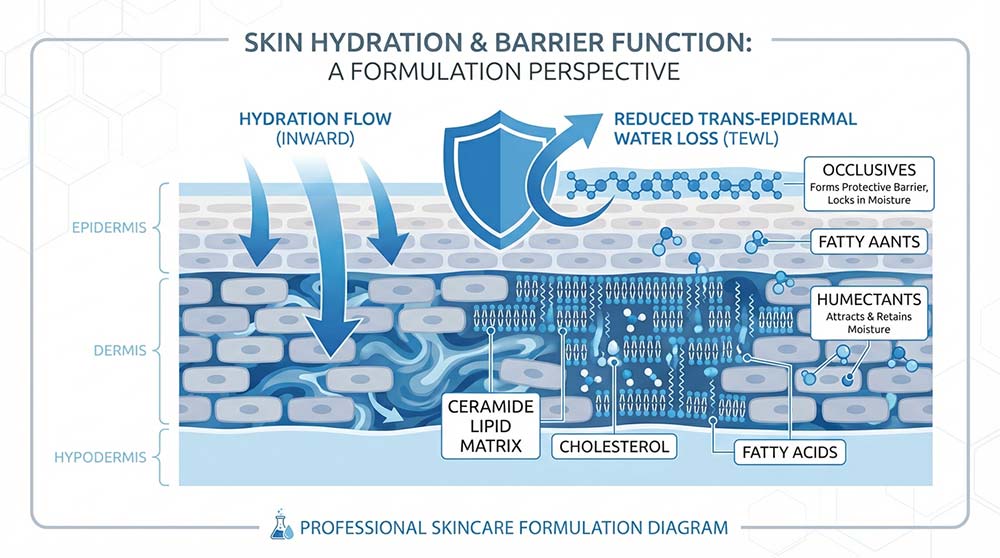
Most moisturisers rely on humectants like glycerin to attract water. However, without restoring the ceramide lipid matrix, this hydration remains superficial. Water evaporates quickly due to unmanaged trans epidermal water loss. Effective barrier repair skincare requires structured dry skin repair formulation that rebuilds lipid architecture, supports natural moisturising factors, and controls inflammation to enable true skin barrier repair.
Skin barrier breakdown is not a surface-level concern. It is a structural failure driven by lipid depletion and uncontrolled trans epidermal water loss. Repair-focused formulations address this through engineered systems, not isolated ingredients. For brands, this defines the difference between temporary hydration and measurable skin barrier repair outcomes supported by formulation science and repeatable performance.
The Ingredient Architecture Behind Effective Dry Skin Repair Formulation
Dry skin repair formulation depends on structured ingredient systems that enable skin barrier repair by restoring lipid balance, reducing trans epidermal water loss, and supporting long-term barrier stability.
Ceramides and the Ceramide Lipid Matrix in Skin Barrier Repair
Ceramides form nearly half of the ceramide lipid matrix within the stratum corneum and are central to skin barrier repair. Ceramide NP and AP improve structural integrity, while ceramide EOP strengthens the lipid scaffold. When combined with cholesterol and free fatty acids in a physiological ratio, they replicate natural barrier composition and reduce trans epidermal water loss effectively.
Humectants in Barrier Repair Skincare for Deep Hydration
Humectants in barrier repair skincare must function beyond surface hydration. Multi-molecular weight hyaluronic acid delivers layered hydration, with lower weights penetrating deeper and higher weights forming a protective film. Urea at controlled concentrations improves flexibility in dehydrated skin. Glycerin remains essential but performs optimally when integrated with lipid-replenishing systems in dry skin repair formulation.
Emollients and Occlusives for Trans Epidermal Water Loss Control
Emollients and occlusives play a dual role in skin barrier repair by filling lipid gaps and reducing trans epidermal water loss. Ingredients such as squalane and triglycerides support lipid integration, while occlusives like petrolatum and dimethicone form a protective seal. This combination is critical in barrier repair skincare designed for severely compromised skin conditions.
Supporting Actives That Strengthen Skin Barrier Repair Systems
Supporting actives enhance the effectiveness of dry skin repair formulation by reinforcing biological processes. Niacinamide promotes ceramide synthesis and reduces inflammation. Peptides stimulate structural proteins essential for barrier integrity. Panthenol supports recovery and reduces irritation. Maintaining a pH range of 4.5–5.5 ensures optimal enzyme activity for ceramide processing and stable skin barrier repair.
Effective skin barrier repair is achieved through coordinated formulation architecture rather than isolated ingredients. Dry skin repair formulation must integrate lipid systems, hydration mechanisms, and active support within a stable pH environment to deliver consistent and measurable barrier repair outcomes.
How Skin Barrier Repair Formulation Systems Create Sustained Results
Skin barrier repair depends on formulation systems that control delivery, stability, and trans epidermal water loss, ensuring dry skin repair formulation delivers consistent and long-term barrier repair outcomes.
Emulsion Design in Barrier Repair Skincare
- Oil-in-water (O/W) emulsions: Provide a lighter texture and faster absorption, making them suitable for moderate barrier repair skincare needs, though they may lack sufficient occlusion for high trans epidermal water loss conditions
- Water-in-oil (W/O) emulsions: Deliver stronger occlusion and reduced trans epidermal water loss, making them ideal for dry skin repair formulation targeting severely compromised or post-procedure skin
- Lamellar emulsions: Mimic the ceramide lipid matrix structure, offering superior skin barrier repair integration, though they require advanced formulation control and scale-up precision
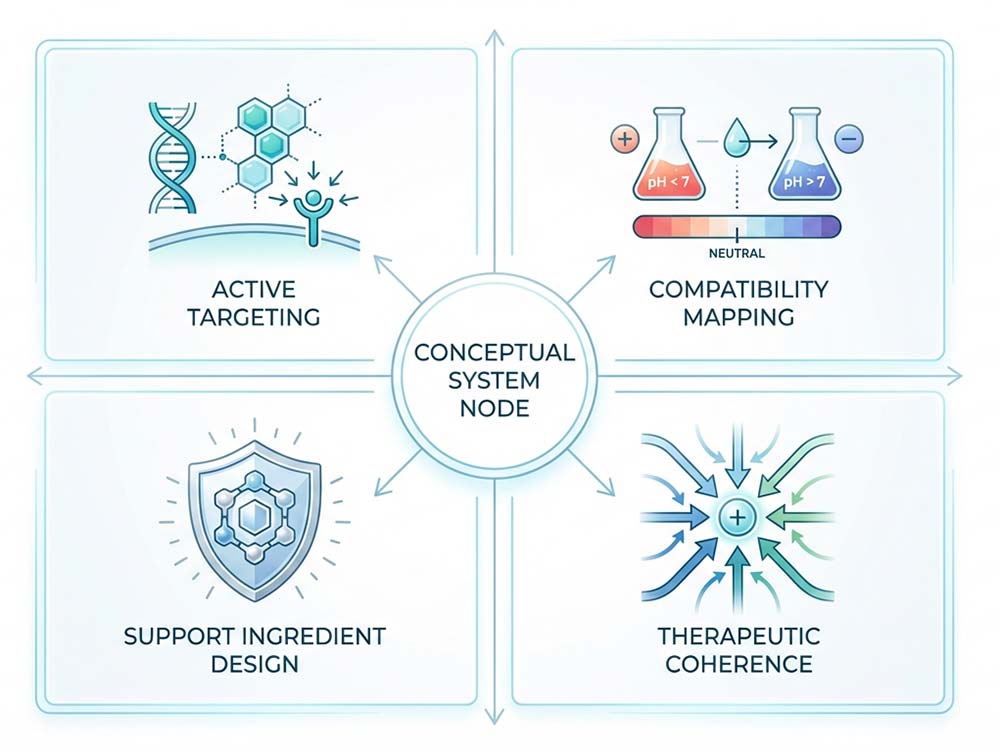
Stability and Delivery in Skin Barrier Repair Formulation
- Encapsulated delivery systems: Liposomes and lipid nanoparticles improve penetration of ceramides and peptides, supporting deeper skin barrier repair in compromised conditions
- Ceramide stability control: Prevents crystallisation through controlled homogenisation and temperature validation, ensuring consistent performance in dry skin repair formulation
- Oxidation management: Antioxidant systems protect lipid integrity, maintaining effectiveness of barrier repair skincare over shelf life
- pH and preservative balance: Maintains optimal enzyme activity and minimises irritation, critical for stable skin barrier repair systems
Sustained skin barrier repair is achieved through structured formulation systems that align delivery mechanisms, stability validation, and lipid integration, ensuring repair is measurable, repeatable, and not limited to temporary hydration effects.
What This Means for Private Label Skin Barrier Repair Formulation Development
Private label brands entering the skin barrier repair category require structured dry skin repair formulation systems. One that go beyond standard manufacturing capabilities and deliver clinically aligned, scalable results.
- Ceramide system architecture: Define precise ceramide lipid matrix ratios with cholesterol and fatty acids. Supported by trans epidermal water loss data to validate real skin barrier repair performance
- pH and stability validation: Maintain a controlled pH range with documented stability across shelf life. Ensuring consistent dry skin repair formulation efficacy and active integration
- Emulsion system alignment: Select formulation architecture based on target skin condition. Ensuring barrier repair skincare performs effectively across varying levels of barrier compromise
- Low-irritation system design: Develop fragrance-free, sensitisation-tested preservative systems suitable for compromised skin, reinforcing trust in skin barrier repair formulations
- Clinical and stability documentation. Build a complete dossier including trans epidermal water loss testing, active retention, and real-time stability.
At Beaucience India, private label development is executed through advanced R&D, scalable manufacturing, and validated formulation systems. With high-capacity production, in-house testing, and precision-led processes, brands achieve repeatable skin barrier repair performance with speed-to-market and long-term reliability.

FAQ: Skin Barrier Repair
Q: What ingredients repair a compromised skin barrier?
A: Skin barrier repair requires ceramides (NP, AP, EOP), cholesterol, and free fatty acids to rebuild the ceramide lipid matrix. Barrier repair skincare also includes humectants, niacinamide, and peptides within a pH-balanced dry skin repair formulation system for effective results.
Q: What is the difference between a moisturiser and a barrier repair formulation?
A: A moisturiser provides surface hydration using humectants, while a skin barrier repair formulation restores the ceramide lipid matrix. Barrier repair skincare reduces trans epidermal water loss. And supports structural recovery through lipid systems and active-driven dry skin repair formulation.
Q: How long does skin barrier repair typically take?
A: Skin barrier repair typically shows improvement within two to four weeks when using a structured dry skin repair formulation. Full ceramide lipid matrix restoration and reduced trans epidermal water loss may take six to twelve weeks.
Why Skin Barrier Repair Formulation Defines True Skincare Performance
Skin barrier repair is achieved through structured dry skin repair formulation, not isolated ingredients.
Effective barrier repair skincare depends on restoring the ceramide lipid matrix. Reducing trans epidermal water loss, and validating performance through formulation science. For private label brands, formulation architecture, stability systems, and scalable manufacturing define product credibility and long-term trust.
Partner with Beaucience India to build high-performance skin barrier repair formulations engineered for scale, speed, and clinical-grade results.
Develop smarter, launch faster, and lead with formulation intelligence at beaucience.in
Our Digital Imprints:
Discover the power of personalized skincare with Beaucience India. We offer premium private label skincare products and services designed for established brands, physicians, estheticians, and skincare professionals.
Beaucience is dedicated to helping brands like yours thrive in the skincare market. If you’re ready to explore custom formulations that set your products apart, we invite you to reach out and learn more about our capabilities.
Our commitment to quality ensures exceptional results tailored to your needs. Stay updated with the latest trends and insights in the beauty and cosmetic industry by subscribing to our newsletter.
“Beauty Alchemist” on Beauty and Cosmetic Industry
Join our community on : Instagram | Facebook | LinkedIn
Transform your skincare vision with Beaucience India today!