
The skincare industry is not being reshaped by trends. It is being reshaped by biology. Microbiome-safe formulation is no longer a niche scientific discussion. It is becoming a defining standard in skincare manufacturing as consumers question irritation, barrier damage, and long-term compatibility.
Recent industry data from NPD suggests that more than 68 percent of consumers now actively seek barrier-friendly skincare that supports tolerance rather than short-term correction.
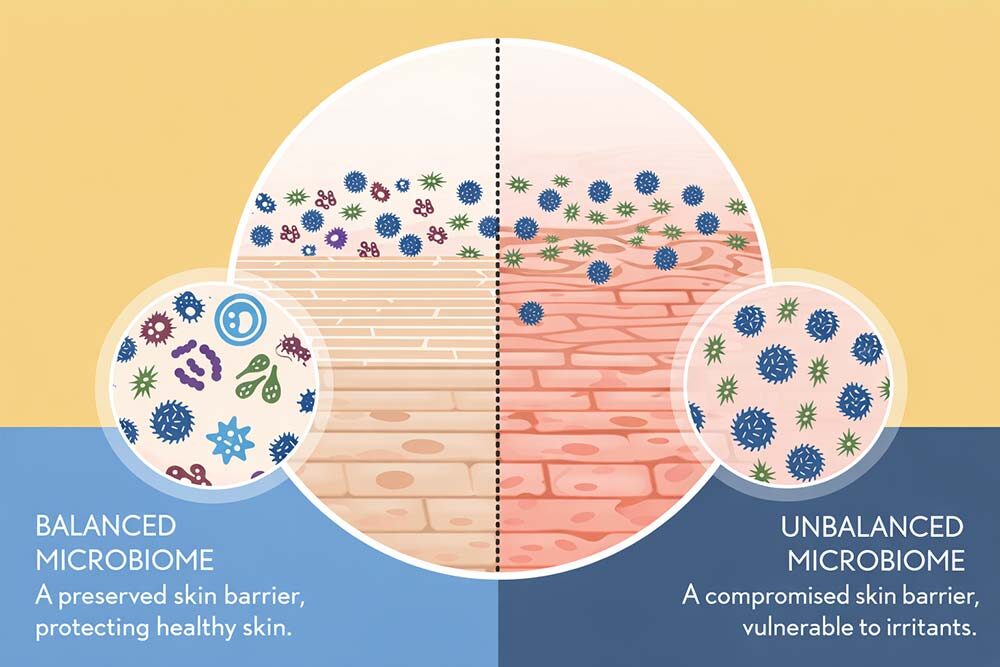
The skin microbiome, a complex ecosystem of beneficial microorganisms, directly influences barrier strength, hydration, and immune resilience. Rising cases of sensitivity and product intolerance are increasingly linked to harsh preservatives and disruptive formulations that destabilise this balance. At the same time, global regulators are intensifying scrutiny around ingredient safety, preservation systems, and transparency in claims.
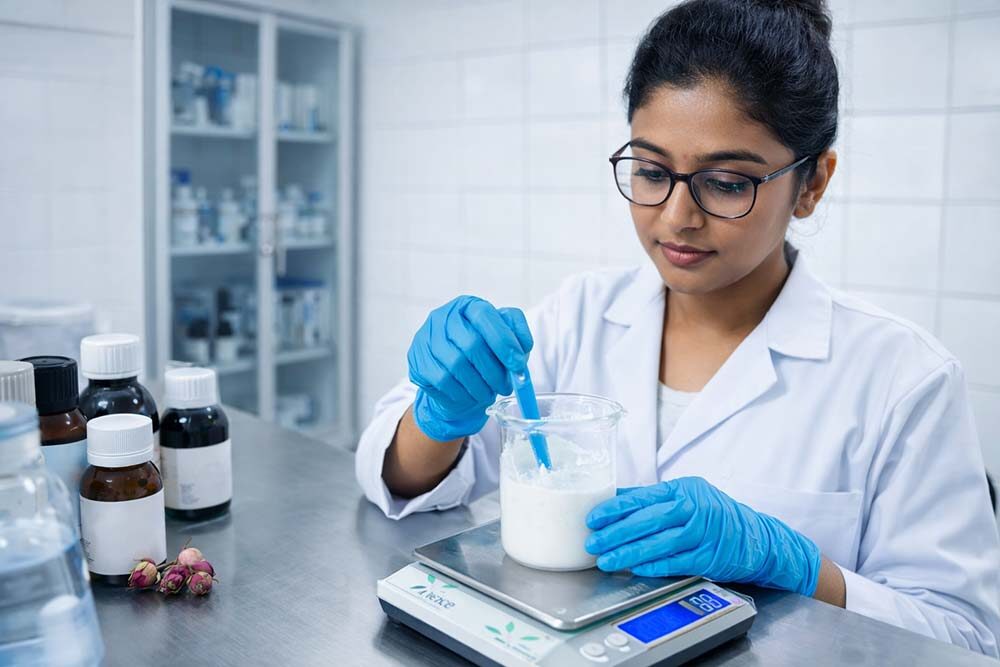
At Beaucience India, microbiome-safe formulation is approached through disciplined R&D, pH optimisation, and stability testing under scale conditions. This article examines why microbiome-safe formulation is becoming essential in skincare manufacturing and how it protects long-term skin compatibility, regulatory confidence, and brand credibility.
Also Read:
- Beyond the Label: Unlocking the Secrets of Effective Face Wash
- Mastering Skincare Ingredients: The Ultimate Guide to Formulation with Purpose
- Building a Clinical Skincare Brand That Sustains Trust
The Skin Microbiome and Microbial Effects on Skin
The skin microbiome is no longer a research curiosity. With the global skincare market projected to grow from USD 131.2 billion in 2022 to USD 212.96 billion by 2032. As skincare manufacturing scales globally, the ability to protect the skin microbiome is now directly linked to long-term product credibility.
What Is the Skin Microbiome
The skin microbiome is a diverse community of bacteria, fungi, and microorganisms that naturally live on the skin surface. These microbes interact continuously with the skin barrier and immune system. Contrary to older assumptions, most are not harmful. They are essential for maintaining hydration, reducing inflammation, and preventing colonisation by harmful pathogens. When this ecosystem remains balanced, skin appears resilient, calm, and well hydrated.
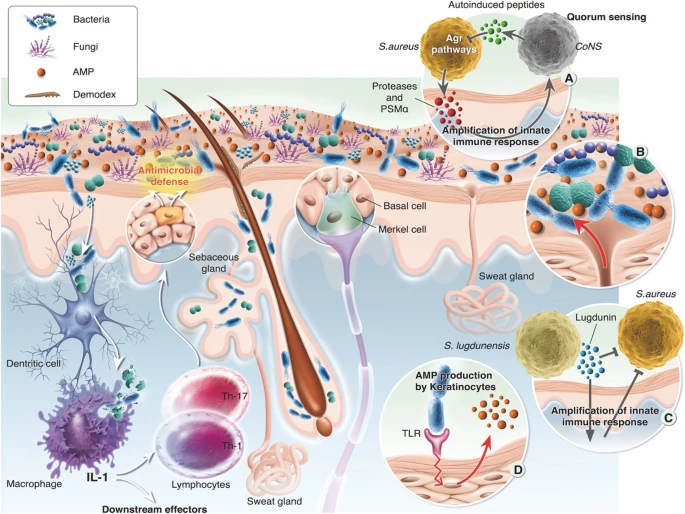
However, this balance is fragile. Harsh preservatives, high-alkaline cleansers, and excessive antimicrobial systems commonly used in conventional skincare manufacturing can disrupt microbial diversity. Once disturbed, sensitivity, dryness, and chronic irritation often follow.
Why Biological Compatibility Matters in Formulation
Traditional formulations focused on eliminating bacteria rather than supporting the skin microbiome. This approach ignored the skin as a living ecosystem. Modern barrier-friendly skincare now recognises that biological compatibility must be engineered into the formulation stage, not corrected later.
When microbiome-conscious systems are used, non-disruptive preservation and pH optimisation help maintain microbial balance. This reinforces the skin barrier rather than weakening it over time.
Respecting the skin microbiome is not a marketing preference. It is a structural requirement for predictable, long-term skin compatibility in modern skincare manufacturing.
Why Traditional Skincare Formulations Are Not Sufficient Anymore
Traditional skincare formulations are no longer sufficient because they prioritised shelf life and short-term correction over long-term biological compatibility. For decades, skincare manufacturing focused on stability under storage and immediate visible results. This led to the widespread use of harsh preservatives, sulfates, drying alcohols, and aggressive actives that often compromised the skin microbiome and weakened barrier integrity over time.
The Structural Weakness in Conventional Formulation
Conventional systems relied heavily on broad antimicrobial strategies that do not distinguish between harmful and beneficial microorganisms. Excessive antimicrobial exposure reduces microbial diversity and disrupts natural defense mechanisms. Over time, this imbalance can increase sensitivity, dryness, and reactivity. Many sensitive and compromised skin conditions today are linked to repeated barrier disruption rather than inherent skin weakness.
Consumers are now more ingredient aware. Demand is shifting toward barrier-friendly skincare and formulations that support long-term skin compatibility rather than aggressive correction.
What Happens When Preservation Overpowers Biology?
When preservation systems overpower biological balance, the skin becomes dependent on constant correction. Recovery slows. Tolerance declines. This cycle increases product reliance while reducing natural resilience.
As clinical knowledge expands and regulatory scrutiny intensifies, skincare manufacturing must move beyond conventional preservation models. Long-term microbial balance and barrier support are no longer optional refinements. They are structural necessities for modern, predictable formulation design.
The Emergence of Microbiome-Safe Formulation in Skincare Production
Microbiome-safe formulation represents a structural shift in skincare manufacturing. Instead of sterilising the skin surface, modern skincare production now focuses on preserving microbial balance and strengthening long-term skin compatibility. This transition reflects a deeper understanding of the skin microbiome and its role in predictable product performance.
Designing for Balance, Not Elimination
Microbiome-safe formulation relies on selective preservation systems and pH-balanced skincare aligned with the skin’s natural acidic mantle. Even minor pH deviations can disrupt microbial diversity and weaken barrier function. By engineering stability without excessive antimicrobial stress, manufacturers protect beneficial microorganisms while maintaining safety standards.
Moving Beyond Blanket Antimicrobial Claims
Producers are moving away from broad anti-microbial positioning and toward tolerance-driven design. Daily-use compatibility, especially in cleansers, moisturisers, and leave-on formulations, is now prioritised over aggressive correction.
What Changes When Preservation Becomes Selective?
When preservation becomes selective rather than destructive, microbial preservation improves and long-term tolerance strengthens. Skin remains resilient under repeated use, reducing the risk of chronic irritation.
Microbiome-safe formulation is no longer a cosmetic preference. It is a competitive evolution in skincare manufacturing that aligns biological science with modern consumer expectations.
Advantages of Microbiome-Safe Skincare to Brands and Consumers
Microbiome-safe formulation delivers measurable value beyond surface-level skin improvement. In modern skincare manufacturing, its impact extends from end-user comfort to long-term brand stability. As sensitivity concerns increase globally, products that protect the skin microbiome are becoming both a biological and commercial advantage.
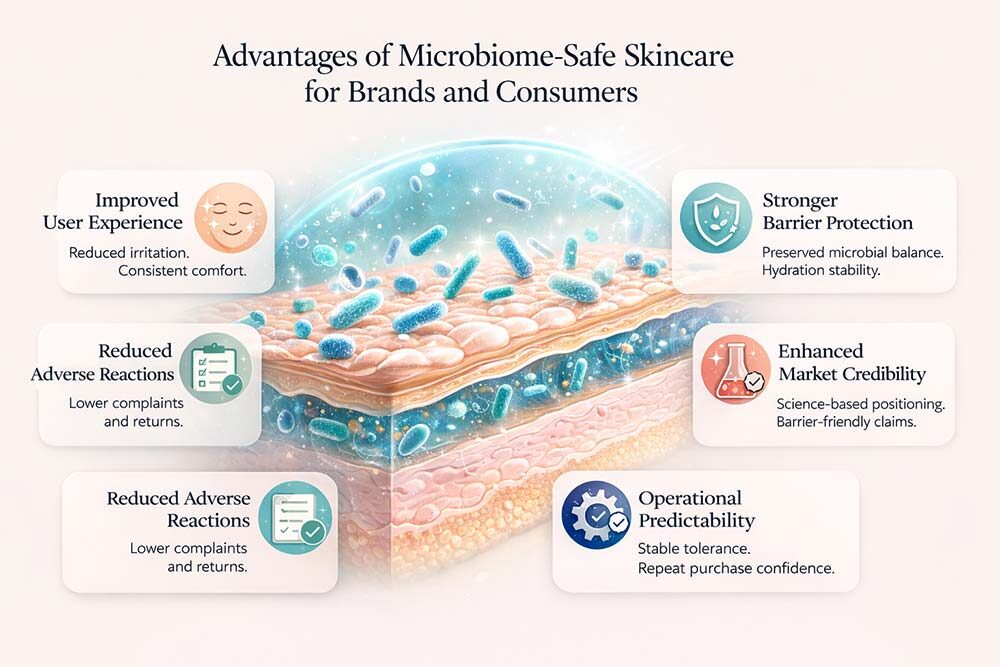
Before understanding brand-level impact, it is important to recognise how these formulations perform under repeated use.
- Improved user experience: Microbiome-safe formulation reduces irritation and supports consistent comfort, especially for sensitive and reactive skin types
- Stronger barrier protection: By preserving microbial balance, these formulations reinforce long-term skin barrier resilience and hydration stability.
- Reduced adverse reactions: Controlled preservation systems lower the likelihood of complaints, returns, and negative clinical feedback.
- Enhanced market credibility: Brands positioned around microbiome-safe formulation align naturally with barrier-friendly skincare and science-based claims.
- Operational predictability: Stable tolerance improves repeat purchase behaviour and protects brand reputation at scale.
When efficacy, safety, and transparency operate together, microbiome-safe formulation strengthens both consumer trust and manufacturing confidence. It positions brands not just as trend participants, but as responsible, science-led leaders in sustainable skincare manufacturing.
Why Microbiome-Safe Formulation Will Define the Future of Skincare
Microbiome-safe formulation is moving from optional positioning to regulatory and commercial expectation. As skincare manufacturing evolves, long-term skin compatibility is becoming as important as immediate results. Regulatory agencies are increasing scrutiny around ingredient disclosure, preservation systems, and safety data, reinforcing the need to protect the skin microbiome through responsible formulation design.
Regulatory and Scientific Alignment
Dermatological research continues to emphasise microbial balance as central to barrier stability and reduced irritation. At the same time, compliance frameworks are tightening globally. Manufacturers who adopt microbiome-safe formulation early are better positioned to meet future safety benchmarks without reactive reformulation.
Also Read:
Sustainable and Responsible Formulation Development
Microbiome-safe formulation also supports sustainability goals by reducing reliance on aggressive preservatives and excessive active concentrations. Smarter formulation improves efficiency and long-term product tolerance.
Key factors shaping the future include:
- Regulatory alignment: Supports evolving transparency and safety requirements in skincare manufacturing.
- Preservation optimisation: Minimises harsh preservative load while maintaining stability.
- Responsible design: Encourages sustainable, barrier-friendly skincare development at scale.
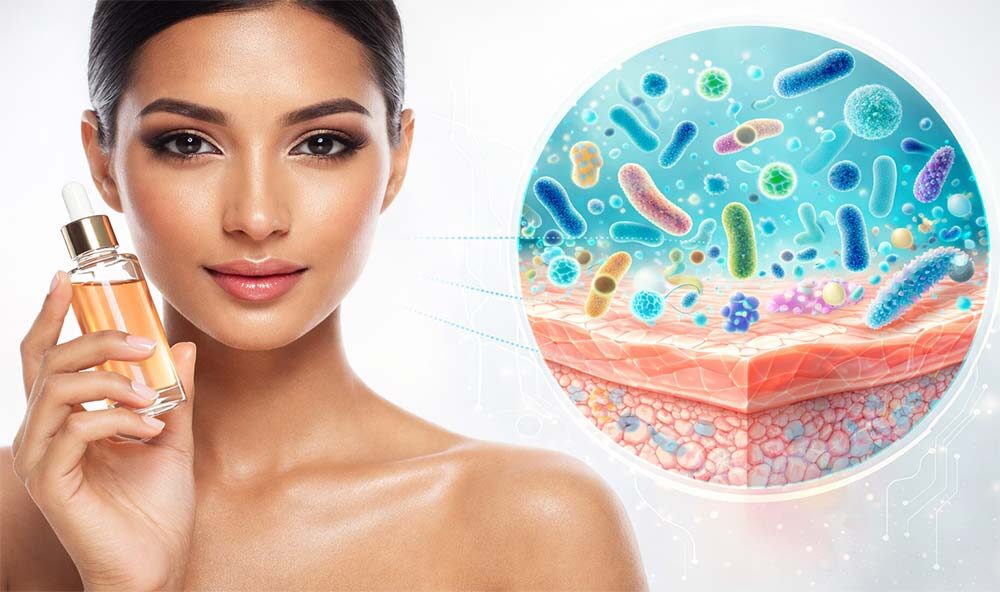
Microbiome-safe formulation is not a passing trend. It represents a structural shift in how modern skincare manufacturing balances biology, compliance, and long-term brand credibility.
Conclusion
Microbiome-safe formulation has moved from the margins to the center of modern skincare manufacturing. As understanding of the skin microbiome deepens, formulators are now responsible not only for short-term performance but for long-term skin compatibility and barrier integrity. Treating the skin as a living ecosystem is no longer progressive thinking. It is essential design discipline.
For manufacturers, microbiome-safe formulation is not just innovation. It is about regulatory confidence, brand trust, and predictable scale. Barrier-friendly skincare and biologically aligned systems are defining the future of responsible, science-led skincare manufacturing.
Partner with Beaucience India to build microbiome-safe formulation systems engineered for scale, stability, and long-term brand credibility. Let us design barrier-friendly skincare that protects your consumers and your reputation under real manufacturing conditions.
Our Digital Imprints:
Discover the power of personalized skincare with Beaucience India. We offer premium private label skincare products and services designed for established brands, physicians, estheticians, and skincare professionals.
Beaucience is dedicated to helping brands like yours thrive in the skincare market. If you’re ready to explore custom formulations that set your products apart, we invite you to reach out and learn more about our capabilities.
Our commitment to quality ensures exceptional results tailored to your needs. Stay updated with the latest trends and insights in the beauty and cosmetic industry by subscribing to our newsletter.
“Beauty Alchemist” on Beauty and Cosmetic Industry
Join our community on : Instagram | Facebook | LinkedIn
Transform your skincare vision with Beaucience India today!