
The global beauty industry is evolving at a pace we haven’t seen before. The global contract manufacturing market is estimated to be valued at approximately 760 to 780 billion dollars in 2025, with a projected CAGR of around 7 to 9 percent. Regulatory shifts, ingredient reforms, sustainability demands, and rising production costs have changed how brands must work with third party manufacturing. As we move toward 2026, founders entering skincare and personal care are stepping into a market that rewards clarity, documentation-readiness, and scientific logic more than ever before.
At Beaucience, we work closely with founders across categories including skincare, body care, personal care, hybrid sun care, and wellness formulations, and one thing is clear: 2026 is the year where brand success depends on understanding how manufacturing truly works. Faster sampling is important, but predictable workflows, transparent R&D, proper regulatory documentation, and ingredient logic now matter more than speed alone in private label skincare.
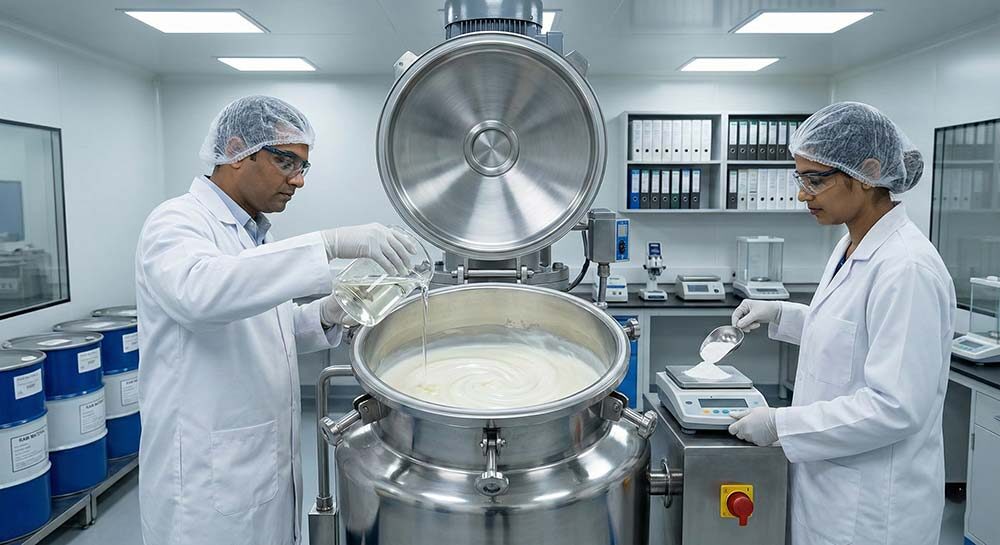
This blog breaks down the shifts shaping private label manufacturing in the 2026 beauty industry and what every founder needs to know before developing their next product.
Also Read:
- The Science of Bubble Masks: How Oxygen Meets Detox for Radiant Skin
- Topical Vitamin C in Skincare – Finding the Right Dose for Results
Why Private Label Manufacturing Is Evolving — The 2026 Landscape
The industry is undergoing a significant shift as the 2026 beauty industry becomes more regulated, competitive, and ingredient-focused. Understanding this landscape helps founders make better decisions as they enter private label skincare or plan new product development through third party manufacturing partners. Beauty consumers are now informed, ingredient-aware, and expect clean, stable, science-backed formulations. Manufacturers have had to evolve to match this shift.
1. Documentation Is Now Non-Negotiable
2026 brings stronger enforcement of global regulations that directly affect private label manufacturing and third party manufacturing workflows:
- EU Cosmetic Regulation updates, especially allergen disclosures
- MoCRA implementation in the US
- UAE compliance changes
- Stricter SDS, COA, allergen reports, traceability, and PIF elements
Brands now need complete regulatory documentation before launch, pushing founders to move from sample-first to documentation-ready development.
2. Transparency in R&D Workflows Is Critical
As private label skincare expands, founders now expect greater clarity from third party manufacturing partners, especially around sampling timelines, ingredient logic, regulatory documentation, and overall R&D workflow transparency.
- Clear sampling timelines
- Ingredient logic explanations
- Compliance-ready raw material lists
- Understanding of stability and packaging compatibility
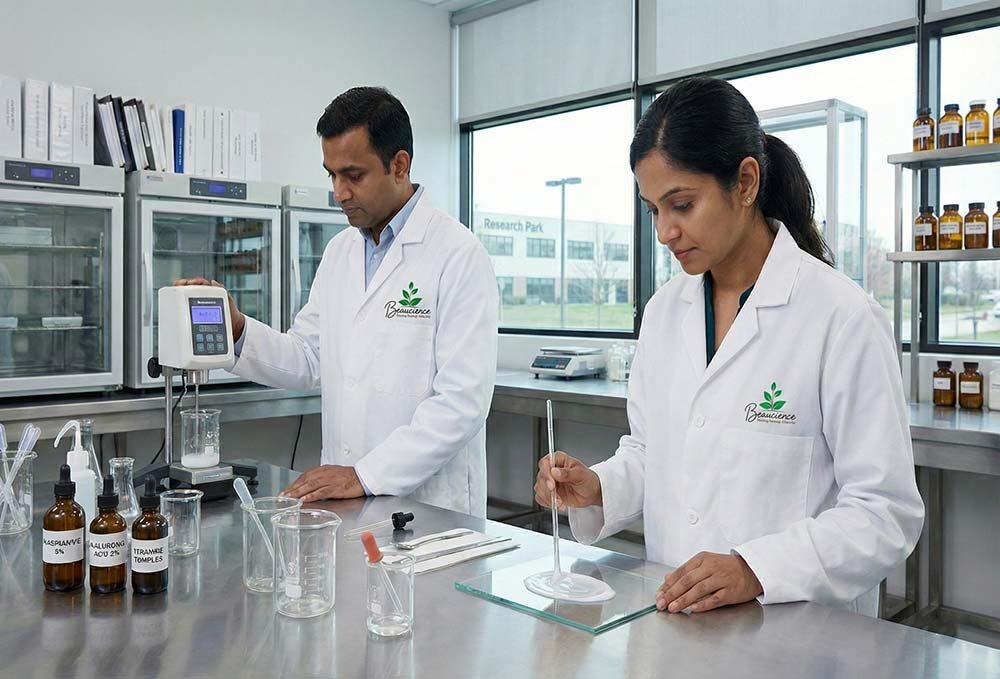
Manufacturers who provide vague timelines or hide R&D workflow details are no longer preferred. A 2025 industry report noted that 78 percent of emerging beauty brands preferred manufacturers offering transparent development roadmaps that support fast-track product development.
3. Rising Raw Material Costs + MOQ Adjustments
Supply chains have reorganized across the beauty industry, affecting everything from ingredient availability to forecasting accuracy. These shifts now influence how private label skincare brands plan production
- MOQ structures are now linked to batch size stability
- High-performing ingredients require controlled concentration limits
- Lead times depend on raw material sourcing windows
This makes forecast planning crucial for founders aiming to scale through sustainable manufacturing and predictable production cycles.
Key Insight: The strongest brands of 2026 will be those that partner with transparent, documentation-ready manufacturers who understand sampling timelines, formulation science, and regulatory expectations rather than those chasing unrealistic speed.
Faster Sampling and Smarter R&D: What Founders Must Expect Now
As the 2026 beauty industry becomes more structured and documentation-driven, founders relying on third party manufacturing need clearer expectations around sampling timelines, formulation science, and the overall R&D workflow. Speed still matters, but in 2026, speed alone cannot build a long-lasting brand. R&D clarity is the real differentiator.
A common misconception among founders is the expectation of extremely quick turnaround times, often framed as, “Can I get samples in one week?” The truth is that modern private label skincare requires accurate brief inputs, regulatory logic, and internal compatibility testing. This makes the real advantage not speed, but predictability.
1. What R&D Needs from Founders Before Sampling
To set accurate sampling timelines and streamline product development, R&D teams now need foundational clarity from the founder before they begin formulating.
To develop accurate first samples, manufacturers now require:
- Benchmark products or texture references
- Ingredient preferences or allergies to avoid
- Claim intentions such as brightening, acne-safe, or sensitive-friendly
- Target price range per unit
- Packaging details
- Regulatory region of launch
Ninety percent of delays happen because the brief is unclear. When brief clarity improves, sampling time reduces dramatically across third party manufacturing workflows.
2. Realistic Sampling Timelines for 2026
Sampling timelines in private label manufacturing now reflect deeper testing requirements shaped by regulatory documentation and formulation science.
Current industry timelines look like this:
Modern private label sampling follows structured timelines that help founders plan launches with greater predictability and fewer delays.
- Concept and brief alignment: 3 to 5 days
- First sample: 10 to 20 working days
- Revisions: 7 to 14 working days
These timelines help founders understand realistic sampling expectations and ensure smoother coordination across the entire third party manufacturing workflow.
Behind every “simple sample,” R&D performs:
- pH checks
- Viscosity checks
- Emulsion stability testing
- Micro-level ingredient compatibility
- Patch safety evaluations
A recent study showed that brands with aligned briefs saw sampling done forty percent faster on average.
3. Ingredient Logic Matters More Than the Ingredient List
Ingredient logic is becoming central to how founders evaluate third party manufacturing partners, especially as skincare manufacturing trends emphasise barrier safety and regulatory compliance.
Founders increasingly ask:
“Why did you choose this surfactant?”
“Why this preservative system?”
“Why this emulsifier?”
Manufacturers are now expected to explain every formulation choice with far greater clarity, especially as founders evaluate safety, performance, and regulatory suitability before approving any product developed through third party manufacturing.
In 2026, manufacturers must justify ingredient logic based on:
- Skin barrier safety
- Regulatory Compliance
- Ingredient sourcing stability
- Claim validity
At Beaucience, formulations use biocompatible emulsifiers, eco-certified surfactants, barrier-safe actives, and traceable documentation to ensure consistency from sample to final batch.
Key Insight: In 2026, the brands that sample successfully aren’t the fastest. They are the ones with clear briefs, transparent expectations, and strong alignment with third party manufacturing partners who prioritise science-led development.
The New Ingredient & Formulation Trends Shaping 2026
Skincare formulation is entering a more advanced phase in the 2026 beauty industry, where private label skincare success depends on clinically proven ingredients, long-term stability, sustainable manufacturing, and stronger science-led product development.
1. Demand for Science-Backed Ingredients
Formulation trends in the 2026 beauty industry are shifting toward evidence-based ingredients that deliver measurable results. Brands now expect third party manufacturing partners to use actives supported by research, long-term stability, and regulatory acceptance. This shift pushes private label skincare toward ingredient systems that balance efficacy, safety, and compatibility across diverse skin types.
Brands are shifting to:
- Peptides for firmness and barrier repair
- Ceramides for barrier strengthening
- Niacinamide for tone and texture
- Encapsulated actives for slow-release efficacy
- Biotech ingredients for sustainability and potency
These ingredient systems require manufacturers to balance concentration limits, compatibility, and long-term stability.
2. Rise of Hybrid Formulations
Hybrid products are becoming central to skincare manufacturing trends as brands combine multiple benefits into a single SKU. Founders want lightweight textures, layered functionality, and daily-use versatility. This demand requires precise formulation science, accurate emulsifier systems, and thoughtful packaging validation so that performance remains stable from sampling to scale.
Examples:
- Tinted ceramide moisturizers
- CC sunscreens with moisturizers and antioxidants
- Barrier repair creams with microbiome-balancing actives
- Waterless formulations for eco-friendly claims
Hybrid products require precise emulsifier selection and packaging validation.
3. Sustainability and Cleanical Beauty
Sustainable manufacturing is now a core expectation within private label skincare, driven by consumer awareness and global regulatory direction. Brands are prioritising formulas that minimise environmental impact while maintaining clinical performance. This evolution has given rise to cleanical beauty, where clean formulations meet evidence-based efficacy for long-term consumer trust.
2026 brands are prioritizing:
- Biodegradable surfactants
- Upcycled botanical extracts
- Cold-process formulations to reduce carbon footprint
- PCR packaging
- Cruelty-free, vegan, and halal compliance
Cleanical beauty, combining clean and clinically validated principles, dominates consumer expectations.
Key Insight: 2026 formulations must balance innovation, sustainability, and performance rather than relying on trend-driven marketing. Brands that integrate science-led development with ethical manufacturing will stay ahead of changing consumer and regulatory demands.
Documentation, MOQs and Compliance — The Essentials Every Brand Must Know
Manufacturing is no longer just about making a formula. It is about ensuring that every product can legally, safely, and consistently enter the market as global regulations tighten across the 2026 beauty industry. Founders working with third party manufacturing must understand documentation, compliance, and MOQ logic early so production does not face avoidable delays.
Documentation readiness:
Every 2026 brand must maintain complete regulatory documentation, including SDS, COA, allergen information, microbiological results, stability data, and batch records. Retailers and marketplaces such as Amazon and Sephora now require these documents upfront before listing approval.
Compliance requirements:
Regulation updates such as EU fragrance allergen disclosures, MoCRA enforcement in the USA, and stricter export transparency rules demand stronger safety substantiation. Founders who understand these compliance expectations during product development avoid costly post-production corrections.
MOQ logic:
MOQs exist because raw materials are sourced in fixed lots, stability depends on consistent batch sizes, and equipment calibration requires minimum fill volumes. Micro-batches waste resources and compromise homogeneity, which is why MOQ planning has become essential for scalable private label skincare manufacturing.
In 2026, documentation, compliance clarity, and MOQ planning are as important as the formulation itself. Brands that prepare early will move through manufacturing with speed, confidence, and fewer obstacles.
Also Read:
- Best Body Exfoliators for Smooth, Radiant Skin in 2025
- How to Maintain a Youthful Glow: 5 Proven Anti-Aging Skincare Tips
2026 Science-Driven Brands
The 2026 beauty industry demands stronger clarity, deeper science, and far better preparation from every founder. Success now depends on how well a brand understands third party manufacturing and the systems that support it.
Documentation, formulation logic, sampling timelines, and regulatory alignment are no longer optional. They define which products scale and which fail early. Brands that approach product development with predictable R&D workflows and transparent expectations gain a real advantage in an industry shaped by evolving skincare manufacturing trends.
As private label skincare becomes more technical, choosing a turnkey skincare partner who prioritises compliance and long-term stability becomes a strategic decision.
If you are building your next formula, Beaucience is ready to support your growth.
Our Digital Imprints:
Discover the power of personalized skincare with Beaucience India. We offer premium private label skincare products and services designed for established brands, physicians, estheticians, and skincare professionals.
Beaucience is dedicated to helping brands like yours thrive in the skincare market. If you’re ready to explore custom formulations that set your products apart, we invite you to reach out and learn more about our capabilities.
Our commitment to quality ensures exceptional results tailored to your needs. Stay updated with the latest trends and insights in the beauty and cosmetic industry by subscribing to our newsletter.
“Beauty Alchemist” on Beauty and Cosmetic Industry
Join our community on : Instagram | Facebook | LinkedIn
Transform your skincare vision with Beaucience India today!