
A refill looks simple to the customer: open, replace and continue. For the brand, however, refillable skincare creates a bigger question. Can the formula remain safe, stable and effective after repeated handling, storage and use?
The answer depends on more than refillable cosmetic packaging. Exposure to air, moisture, light and contamination can change product quality, while the refill format itself influences preservation, dispensing, packaging compatibility and the consumer experience.
At Beaucience, we evaluate refill concepts as complete skincare product development systems in which formulation and packaging must work together. Our R&D perspective begins with the intended formula, usage pattern and refill mechanism, then tests whether every element can support consistent performance at commercial scale.
This article explains why formulation must lead refillable product development, how refill packaging affects stability and safety, and what skincare brands should assess before investing. The aim is to help founders determine whether a refill system creates sustainable value without weakening efficacy, quality or consumer trust.
Also Read:
- Fermented Skincare and the Future of Beauty Formulation
- Why Multifunctional Skincare Works Only When Formulation Supports Every Claim
- Why More Skincare Actives Do Not Mean Better Results
Refillable Skincare Product Development Begins with Formulation
Refillable skincare must be engineered around the formula because repeated opening, transfer and reuse can change its exposure conditions. Packaging decisions should follow the product’s stability, preservation and performance requirements.
Sustainable skincare formulation begins by defining the refill mechanism, expected handling, exposure risks and intended product life. The formula, preservative system and packaging must be evaluated together to maintain microbiological safety, ingredient stability, dispensing consistency and consumer acceptability during use.
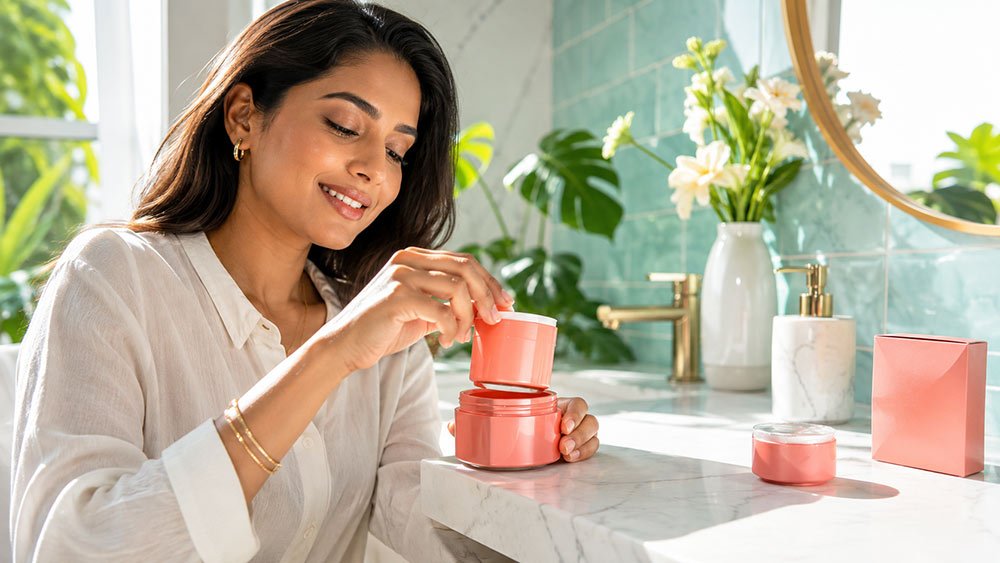
India’s clean beauty market, valued above ₹7,700 crore, provides commercial context for refill innovation, even without a separate category estimate.
Formulation Stability Protects Refillable Skincare Products
Active ingredients, emulsifiers and supporting components can react differently when exposed to oxygen, moisture, light or temperature changes. Refillable formats may also introduce repeated handling, so stability testing must reflect the intended refill method rather than only conventional storage conditions.
Preservation must account for realistic consumer use, particularly when a pouch is poured into a reusable container. Physical, chemical and microbiological assessments should monitor pH, viscosity, colour, odour, active retention and microbial safety throughout the intended shelf life and use.
Refillable Cosmetic Packaging Supports Formula Integrity
Packaging compatibility determines whether the formula interacts with pumps, liners, seals, cartridges or pouches. Testing should examine material migration, product absorption, leakage, evaporation and dispensing performance across manufacturing, transport, storage and repeated replacement of the refill unit by the consumer.
Pods and cartridges generally limit direct contact during replacement, while refill pouches require controlled pouring into a cleaned container. Each format creates different contamination, convenience, cost and waste implications, so packaging selection must match the formula and consumer behaviour closely.
Formulation-led development allows brands to select refill packaging with evidence, rather than assumption. It protects product quality while helping founders judge whether the system is workable, commercially relevant and sustainable.
Real-World Use Determines Refillable Skincare Performance
Refill systems introduce risks that conventional skincare packaging may not create. Development requires brands to assess the formula, manufacturing process and consumer behaviour as connected parts of a product system.
Formula Design Must Anticipate Repeated Use
Formula design must reflect the conditions created by refilling. Ingredient behaviour, preservation strength and product consistency should therefore be assessed under realistic opening, dispensing, storage and repeated consumer handling patterns.
- Ingredient compatibility: Active ingredients, emulsifiers and supporting components must remain stable without separation, undesirable reactions, discolouration or measurable loss of efficacy or performance.
- Preservation strength: The preservative system must control microbial risk across intended opening, dispensing, replacement and storage conditions without affecting formula performance or texture.
- Consumer use: Testing should account for unclean hands, incomplete container cleaning, delayed replacement, incorrect storage and other foreseeable handling behaviours after purchase by consumers.
Operational Controls Protect Commercial Performance
Manufacturing and compliance decisions determine whether the concept remains safe beyond the laboratory. Operational controls must protect every batch while supporting hygienic production, reliable filling, traceability and consistent refill performance.
- Manufacturing hygiene: Production, transfer and filling controls must prevent cross-contamination while maintaining batch consistency, product quality and reliable dispensing across refill formats consistently.
- Oxidation control: Oxygen-sensitive actives and oil systems require suitable processing, headspace management, protective closures and clear consumer instructions for opening, storage and replacement.
- Regulatory compliance: Refillable skincare products must meet cosmetic safety, labelling, stability testing, quality control and claim-substantiation requirements despite their sustainability positioning or marketing claims.
Managing these factors together reduces avoidable development failures and strengthens product credibility. It helps brands determine whether a refill concept can maintain safety, performance and consumer trust after commercial launch.
Refillable Skincare Sustainability Requires Lifecycle Validation
Refillable formats become sustainable only when the entire product system reduces material use while maintaining safe performance across repeated reuse cycles.
Lifecycle Evidence Separates Sustainability from Packaging Claims
A refill system cannot be judged by the outer container alone. Its environmental value depends on how many times the pack is reused, the quantity and type of material used for each refill, manufacturing energy, transport weight, product loss and end-of-life recovery. A heavier permanent pack may require several refill cycles before it creates a material advantage. If consumers stop after one purchase, the expected reduction in waste may never be achieved at the intended scale for that product system.
Brands should evaluate sustainability alongside technical and commercial feasibility. Scientific formulation, stability testing and refillable cosmetic packaging must work together, while clear instructions should help consumers clean, replace, store or pour the product correctly. Quality control must continue after launch through complaint review, packaging performance monitoring and batch consistency checks. This evidence-led approach shows whether the refill format protects product quality, remains convenient enough for repeat purchase and delivers a credible advantage over conventional skincare products in everyday consumer use.
When Does Refillable Packaging Become Genuinely Sustainable?
Refillable packaging becomes sustainable when repeated use produces a measurable reduction in material consumption, product waste and lifecycle impact without compromising formula safety or performance. The assessment must include packaging weight, refill frequency, transport, consumer adoption and end-of-life recovery systems.
Only lifecycle evidence can convert a refillable concept into a sustainable skincare formulation that protects trust and commercial relevance.
Refillable Skincare Systems Require Integrated Development
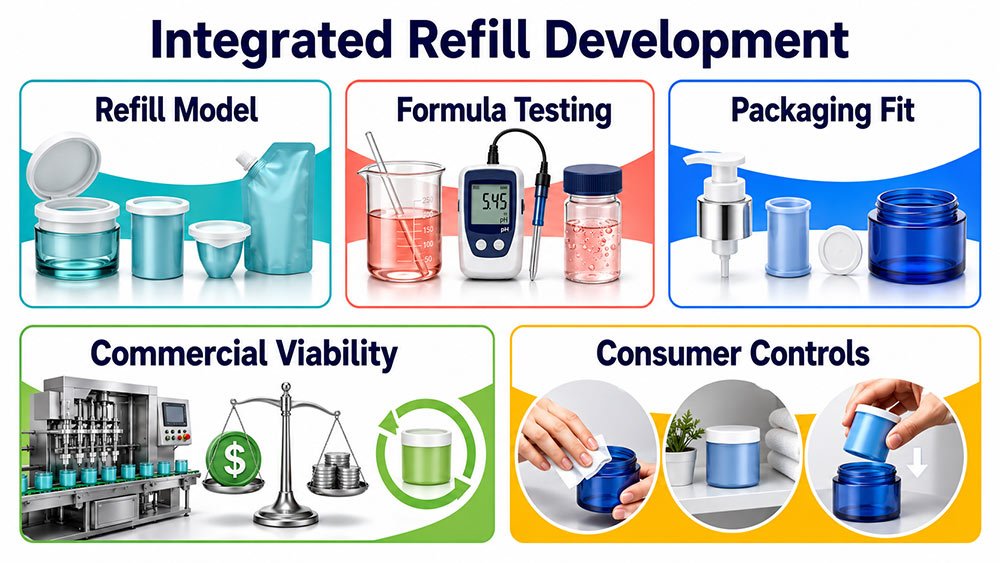
Successful refillable skincare systems are developed through coordinated decisions across formulation, packaging, manufacturing, quality and consumer use. Each stage must support safe performance, practical adoption, commercial viability and measurable sustainability.
- Refill model: Select cartridges, pods, pourable pouches or concentrate formats according to the formula, usage behaviour and contamination exposure expected during reuse.
- Formulation testing: Assess physical, chemical and microbiological stability, preservative efficacy, pH, viscosity, active retention and dispensing performance under realistic conditions of use.
- Packaging compatibility: Test materials, pumps, liners, seals and closures for migration, leakage, oxidation, moisture exposure and safe replacement or product transfer performance.
- Commercial feasibility: Evaluate packaging cost, production requirements, refill pricing, transport efficiency, expected reuse frequency and consumer willingness to purchase repeatedly over time.
- Consumer controls: Provide clear instructions for cleaning, storage, pouring and replacement, then monitor complaints, batch consistency and packaging performance after launch closely.
At Beaucience, this integrated process helps founders test both technical performance and business potential before investment, creating refillable skincare products that can scale without weakening safety, quality or consumer trust.

Also Read:
- Skincare Product Development: Build the Right Product Before You Formulate
- Cosmetic Raw Materials: Quality, Stability and Performance
- High-Performance Body Skincare Beyond Moisturisation
- Scalp Care Formulation Beyond Shampoo: What Brands Need to Get Right
Conclusion
Refillable skincare succeeds when formulation, preservation and packaging are developed as one system. Stability, compatibility and consumer-use testing must reflect the refill format in everyday skincare. Whether it uses cartridges, pods, pourable pouches or concentrated skincare products that reduce packaging and transport volume.
The commercial case also depends on refill cost, production feasibility, consumer convenience and repeat adoption. A system that performs safely but is difficult to clean, replace or repurchase may fail to deliver meaningful sustainability or long-term value for the brand.
Future-ready skincare product development therefore begins before refillable cosmetic packaging is chosen. When science, manufacturing control and consumer behaviour guide the decision, brands can build credible refill systems that protect product performance, reduce avoidable risk and earn lasting consumer trust.
Develop your refillable skincare range with Beaucience through formulation, testing, packaging compatibility and scalable manufacturing support.
Our Digital Imprints:
Discover the power of personalized skincare with Beaucience India. We offer premium private label skincare products and services designed for established brands, physicians, estheticians, and skincare professionals.
Beaucience is dedicated to helping brands like yours thrive in the skincare market. If you’re ready to explore custom formulations that set your products apart, we invite you to reach out and learn more about our capabilities.
Our commitment to quality ensures exceptional results tailored to your needs. Stay updated with the latest trends and insights in the beauty and cosmetic industry by subscribing to our newsletter.
“Beauty Alchemist” on Beauty and Cosmetic Industry
Join our community on : Instagram | Facebook | LinkedIn
Transform your skincare vision with Beaucience India today!