Scalp Care Formulation Beyond Shampoo: What Brands Need to Get Right
Many consumers struggle with scalp buildup, flaking, sensitivity, dryness, and oiliness, yet shampoo often remains their only solution. This creates a formulation challenge for brands. Effective scalp care formulation requires more than adapting an existing facial or hair care formula.
Shampoos, exfoliants, tonics, leave-on masks and serums are all examples of scalp care products. Each requires decisions around ingredient selection, concentration, delivery system, pH, sensory profile, compatibility and intended frequency of use.
At Beaucience India, our R&D and manufacturing experience helps brands address formulation compatibility, stability, microbiological quality, packaging suitability and sensory performance while developing scalp care products for commercial production.
In this article, we explore how brands should approach scalp care beyond shampoo by considering scalp needs, product format, active selection, formulation compatibility, safety, stability, sensory experience and appropriate product testing.
Scalp Care Formulation Requires More Than Shampoo Development
For any formulator, developing scalp care products requires understanding how different scalp conditions influence formulation decisions. Beyond shampoo, serums, tonics, exfoliants and masks offer distinct application methods, contact times and sensory expectations that manufacturers must consider.
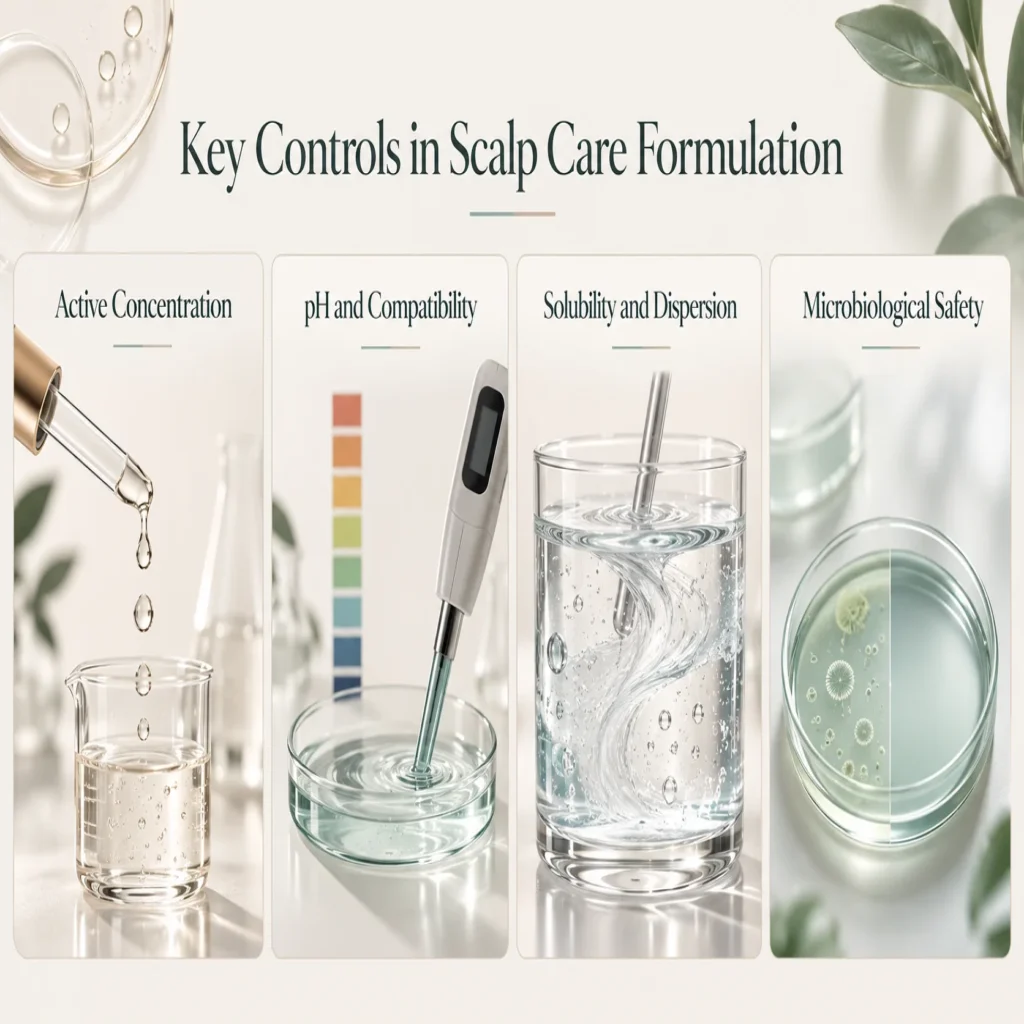
Effective scalp care formulation depends on balancing active ingredient concentration, pH, solubility, formulation compatibility and microbiological safety. These technical parameters influence product stability, consistent performance and suitability for repeated use, making formulation design essential beyond basic cleansing.
Scalp Needs Influence Product Format and Formulation Design
When addressing problems with the scalp like too much oil, dryness, build-up, sensitivity or flaking, the formulation methods need to be different. The product format should be in line with the proposed use of the scalp instead of mere marketability.
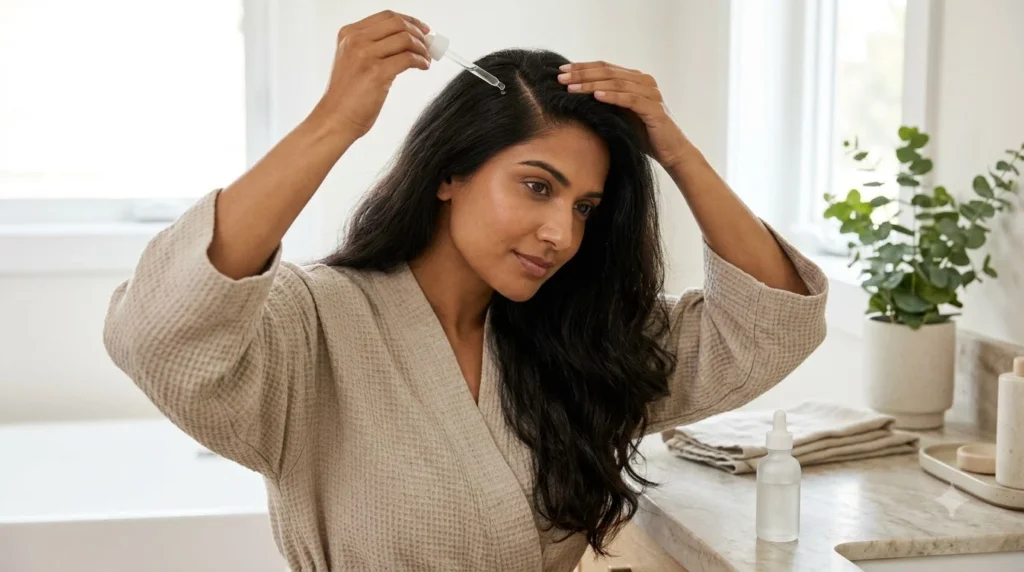
Shampoos, leave-on serums, tonics, masks and exfoliating products vary in contact time, application and whether they are rinsed off or “leave on. These differences impact ingredient selection, concentration, delivery, texture and the sensory performance that each formulation is expected to deliver. A scalp serum formulation requires particular attention to active concentration, leave-on contact time and repeated-use tolerability to maintain scalp comfort.
Different ingredients have different purposes in hair care products, such as surfactants, humectants, emollients, exfoliants, soothing ingredients, botanicals and functional actives. The type of selection should be connected to the product function and formulation structure the selection will be intended for.
Before any claims are made for the performance, it is important to find out that the ingredients are compatible, the concentration, the solubility, and the stability, as well as the pH value. Technical evaluation for scalp treatment formulations is important in that interactions may occur between active and supporting ingredients which will alter formulation behaviour. For scalp barrier care, formulation decisions must balance gentle cleansing, hydration and ingredient tolerability without compromising product performance.
In our formulation experience at Beaucience, everyday skincare development works best when the concern is clearly defined first. Product format, ingredient selection and formulation design must then follow that specific need.
Scalp Care Ingredients Require Physical, Chemical and Microbiological Control
Formulations with product compaction that distribute into the scalp are prone to physical, chemical and microbiological characteristics that could affect product stability, product sensory characteristics, ingredient action, contamination risk and overall consumer use experience.
Physical and Chemical Properties Influence Formulation Behaviour
Measurable ingredient and formulation properties influence processing, compatibility, texture, application, stability and the performance of active ingredients in scalp-focused products.
pH and Compatibility: Correct pH selection may affect the stability of ingredients, formulation compatibility and scalp-use suitability. Should be assessed in the context of the overall formulation.
Solubility and Dispersion: Ingredient solubility, particle size and dispersion affect product uniformity and consistent delivery. At the time of incorporation of functional ingredients into the various formats of product these properties become significant.
Viscosity and Sensory Profile: Viscosity, ease of application and residue properties modulate the application experience on shampoos, serums, tonics and treatments. The sensory profile should be matched to the use of the product to achieve the desired sensory profile.
Microbiological control is particularly important for water-based scalp products. Preservation, testing, packaging and controlled manufacturing need to work together to maintain appropriate product quality throughout development and production.
Preservation System: Identify and assess preservation systems based on their composition and intended product application. Preservation should not be regarded as its own standalone concept or decision to make, but as a broader component of the whole formulation.
Microbiological Testing: Ensure microbiological quality by proper testing during the development and manufacture. Testing contributes in confirming that the product incorporates predetermined quality requirements.
Packaging and Handling: Packaging Design, Storage and Manufacturing Hygiene have the potential to reduce contamination hazards in the product lifecycle from the manufacturing or filling points to the consumer.
For private label hair care brands, these development controls help translate targeted scalp formulations into consistent, scalable commercial products.
From a product development perspective, I see quality as something built into every formulation decision. Physical, chemical and microbiological controls must remain consistent from development through use.
Scalp Care Formulation Quality Influences Stability and Consumer Experience
Scalp care formulation quality determines how consistently a product maintains its stability, texture and sensory performance throughout its shelf life. Ingredient interactions, formulation structure and packaging compatibility influence product reliability, making their evaluation essential during development before commercial manufacturing.
Formulation Compatibility Supports Stability and Consistent Performance
Ingredient incompatibility may cause changes in viscosity, colour, smell, breakup into phases, precipitation or decomposition of ingredients. Describing strength-to-strength interactions in the formulation development process can provide insight into possible problem areas prior to commercial production.
These factors also relate to stability testing and to packaging compatibility and controlled storage. Washing products for the human scalp should be tested under proper condition before launching on the market to gain insight into the long-term performance of the product and its packaging.
What Should Brands Consider When Formulating Scalp Care Products?
Brands should evaluate scalp needs, product format, active concentration, ingredient compatibility, pH, preservation, microbiological safety, stability and packaging compatibility when developing scalp care products. Sensory performance and intended frequency of use must also be assessed through appropriate testing before commercial manufacturing.
In my experience, strong scalp formulations depend on more than active ingredients. Compatibility, stability, safety and consistent consumer experience ultimately determine a product’s long-term credibility.
Manufacturers Build Scalp Care Products Through Structured Formulation Systems
Successful scalp care product development connects consumer needs with formulation science, testing and manufacturing readiness. Each stage requires defined technical decisions to ensure the finished product delivers consistent quality, stability and performance at commercial scale.
Define Scalp Needs: Identify the target consumer, scalp concern, product claims, application format, usage frequency and sensory expectations before formulation begins.
Evaluate Ingredients: Assess active concentration, raw material quality, solubility, pH compatibility and ingredient interactions within the complete formulation system.
Validate Product Performance: Conduct appropriate stability, microbiological, packaging compatibility and sensory testing under intended storage and usage conditions before approving the formulation.
Ensure Manufacturing Consistency: Establish product specifications, batch records, process controls and quality checks to maintain consistency during scale-up and commercial production.
At Beaucience India, we approach scalp care development as a connected R&D and manufacturing process. The objective is not simply to create another scalp product, but to develop a commercially viable formulation that delivers consistent performance beyond traditional shampoo.
Effective scalp care formulation begins by recognising that not every scalp concern can be addressed through shampoo alone. Targeted product development requires precise ingredient selection, suitable delivery systems and formulations designed around specific scalp needs.
Product quality depends on how well ingredient compatibility, pH, preservation, stability, packaging and sensory performance work together. These factors must be evaluated through appropriate testing before commercial production.
For brands, the goal is to develop scalp care products that combine scientific credibility, consistent performance and manufacturing scalability to build lasting consumer trust.
Partner with Beaucience India for custom scalp care formulation, R&D expertise, product testing and scalable private label manufacturing.
Discover the power of personalized skincare with Beaucience India. We offer premium private label skincare products and services designed for established brands, physicians, estheticians, and skincare professionals.
Beaucience is dedicated to helping brands like yours thrive in the skincare market. If you’re ready to explore custom formulations that set your products apart, we invite you to reach out and learn more about our capabilities.
Our commitment to quality ensures exceptional results tailored to your needs. Stay updated with the latest trends and insights in the beauty and cosmetic industry by subscribing to our newsletter.