
A brand develops a peptide serum with promising anti-ageing claims. The formula looks right, but will it perform consistently? This is the challenge with peptides in skincare. Ingredient selection alone cannot guarantee stability, compatibility, or effective delivery through the skin barrier.
The market has shifted. Buyers of private label skincare increasingly expect more than appealing packaging and ingredient claims. They want credible evidence, measurable performance, and formulation transparency. This places greater responsibility on product development and cosmetic manufacturing.
At Beaucience India, our R&D approach begins with understanding the intended function of each peptide. We evaluate ingredient compatibility, pH requirements, delivery challenges, and manufacturing feasibility before translating a formulation into commercial production.
In this article, we examine what peptide formulation science must get right, from selecting suitable peptides and maintaining stability to optimising delivery systems, validating performance, and ensuring manufacturing consistency. These decisions determine whether a promising peptide concept becomes a credible, commercially viable skincare product.
Also Read:
- Scalp Care Formulation Beyond Shampoo: What Brands Need to Get Right
- Cosmetic Raw Materials: Quality, Stability and Performance
The Chemistry of Peptide Stability and Bioavailability
Effective peptide formulation requires an understanding of peptide structure, ingredient compatibility, and skin delivery. Different peptides behave differently inside complex emulsions, making stability and bioavailability essential considerations during product development.
Peptide stability in skincare depends on peptide-specific pH requirements, compatible ingredients, protective delivery systems, and controlled manufacturing conditions. These factors help minimise degradation, preserve active integrity, and support consistent product performance throughout the intended shelf life.
Optimising pH and Buffer Systems in Peptide Formulation
Peptides are sensitive to pH changes, but their stability requirements vary. Signal peptides and other bioactive peptide classes cannot be treated as interchangeable ingredients. Their chemical structures and functional requirements influence formulation decisions.
When the pH is too high or too low for a particular peptide, degradation may occur. Formulators must establish the appropriate range using supplier specifications and stability studies rather than applying one universal pH standard.
But getting the pH right on day one is not enough. A suitable buffer helps minimise pH drift during storage. For a peptide serum or cream, long-term stability must be evaluated under relevant temperature and storage conditions.
Enhancing Peptide Delivery Systems in Serum Development
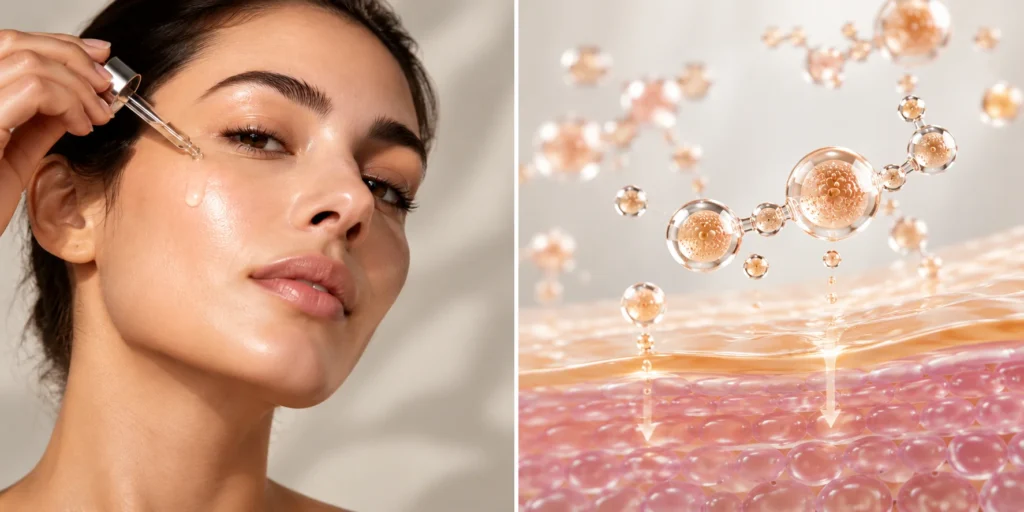
Many peptides are hydrophilic, meaning they dissolve readily in water but face difficulty penetrating the skin’s outer barrier, the stratum corneum. Their molecular size and chemical properties influence delivery. Understanding skin structure and barrier function also helps explain why personalised skincare requires thoughtful ingredient selection.
Peptide delivery systems such as liposomal encapsulation may improve ingredient protection and skin interaction. Fatty-acid conjugation can increase lipophilicity, potentially improving how certain peptides interact with the skin barrier. However, delivery performance depends on the peptide’s intended function, chemical compatibility, and supporting evidence.
In our product development approach at Beaucience, peptide selection comes before delivery optimisation. Experience reinforces one principle: stability and bioavailability must be evaluated together, not treated as separate formulation decisions.
Scalable Precision in Peptide Skincare Manufacturing
Moving a delicate peptide formulation from the lab to commercial scale requires precise control over processing conditions, ingredient stability, and operational consistency. Manufacturing readiness must be considered during R&D, not after formulation approval. For emerging brands, private label cosmetics provide a commercial pathway connecting product development with scalable manufacturing
High-Volume Production Infrastructure for Bioactive Peptides
Scaling peptide formulations requires manufacturing infrastructure that can maintain consistent processing conditions. Temperature, mixing intensity, and batch continuity must be evaluated according to the specific peptide and finished formulation.
- Thermal and Shear Control: Beaucience India operates a 100,000 kg monthly production capacity. Temperature and mixing conditions are controlled according to formulation requirements to minimise processing-related degradation.
- Continuous Operational Reliability: Round-the-clock power backup supports uninterrupted manufacturing operations, reducing the risk of process deviations and unexpected batch interruptions.
- Batch Consistency: Standardised processing parameters help maintain product uniformity when transitioning from laboratory samples to commercial manufacturing volumes.
Protective Packaging and Lean Manufacturing Execution
Packaging plays an important role in protecting peptide formulations during storage and distribution. Container compatibility, exposure to air, and filling conditions must align with the formulation’s stability requirements.
- Airless Filling Capabilities: Our facilities support monthly filling capacities of 800,000 bottles or jars and 500,000 tubes. Airless packaging can help reduce air exposure where appropriate.
- Packaging Compatibility: Container selection considers formulation stability, material interactions, and product protection throughout the intended shelf life.
- Lean Manufacturing Efficiency: Our lean manufacturing approach minimises process waste and improves operational efficiency, supporting cost-effective production for brand partners.
In our experience at Beaucience, successful scale-up means preserving the quality established during R&D. Manufacturing precision helps translate a promising peptide formulation into a consistent, commercially viable product.
Scientific Validation of Peptide Stability and Product Claims
Scientific validation in peptide formulation requires stability testing, quality controls, and appropriate efficacy evidence. These assessments help brands distinguish between a chemically stable product and one with clinically supported performance claims.
Quality Assurance Protocols in Peptide Manufacturing
At Beaucience India, quality is built into every stage of product development, from initial formulation trials to consistent commercial manufacturing.GMP practices and BSI ISO 9001 certification provide a structured foundation for manufacturing controls and quality management. Effective regulatory compliance also requires documented stability testing, quality controls, and evidence supporting the finished product’s claims.
Accelerated stability studies assess formulation changes under elevated temperatures, while freeze-thaw testing evaluates physical stability during temperature fluctuations. Where appropriate, peptide-specific assay analysis measures active content over time. Together, these assessments help identify degradation risks, formulation instability, and potential shelf-life concerns.
How Does Stability Testing Support Peptide Skincare Claims?
Stability testing evaluates whether a peptide serum or cream maintains acceptable physical and chemical quality throughout its intended shelf life. It can assess pH changes, appearance, formulation integrity, and peptide content. However, claims such as wrinkle reduction and improved skin firmness require appropriate efficacy studies beyond stability testing.
In our experience at Beaucience, scientific validation begins with understanding what each test can establish. Reliable peptide skincare products require both formulation stability and credible evidence supporting their intended performance.
Accelerating Peptide Skincare Launches with Turnkey Solutions
Launching a successful peptide skincare line requires more than rapid product development. A successful peptide product launch depends on how well formulation decisions, ingredient quality, packaging requirements, and manufacturing capabilities come together before production begins.
- Rapid Prototyping: At Beaucience India, we develop custom formulation samples within 10 to 15 days, allowing brands to evaluate product concepts and refine formulations before production.
- Ingredient and Cost Transparency: Following sample approval, we provide detailed ingredient information and cost breakdowns, helping brands make informed decisions about formulation quality, positioning, and commercial feasibility.
- Protective Packaging: Our team assists with selecting compatible packaging, including airless and light-protective options where appropriate, to minimise exposure risks and support peptide stability during storage.
- Reliable Production Timelines: Once raw materials and packaging are procured, our manufacturing process targets production and dispatch within 10 to 15 days, supporting predictable launch planning.
At Beaucience, we see turnkey development as more than accelerating market entry. Connecting formulation science with practical manufacturing decisions helps brands launch differentiated peptide skincare products without compromising quality, stability, or commercial readiness.

Also Read:
- High-Performance Body Skincare Beyond Moisturisation
- Why More Skincare Actives Do Not Mean Better Results
Conclusion
Successful peptides in skincare depend on selecting the right peptide, maintaining formulation stability, and using suitable delivery systems. Precise pH control, ingredient compatibility, and scientific validation help translate promising actives into reliable skincare products.
At Beaucience India, we combine R&D expertise, GMP and ISO 9001 certified quality systems, and scalable manufacturing capacity of 100,000 kg per month. Our focus extends beyond production to solving formulation challenges and supporting consistent product quality.
For beauty brands, long-term success depends on effectiveness, timeliness, and reliability. The right manufacturing partnership helps turn formulation precision into consumer trust and sustainable commercial growth.
Ready to develop high-performance peptide skincare? Partner with Beaucience India for custom formulation, scientific precision, and scalable manufacturing.