
A leading skincare brand was in the process of choosing a skincare contract manufacturer for its upcoming product line. The samples looked promising, pricing was competitive, and the manufacturer offered an impressive product range. But one important question remained. Could the same quality be maintained across thousands of units?
This is where many brands need to look beyond the initial proposal. A successful product launch depends on more than formulation. Quality systems, stability testing, raw material consistency, regulatory compliance, and production readiness all influence long-term performance.
At Beaucience India, our experience in in-house R&D, custom formulation, and contract manufacturing has reinforced the importance of evaluating these capabilities before committing to a manufacturing partnership. The right decisions at this stage can prevent costly complications later. Understanding everyday skincare needs helps brands develop formulations suited to modern consumers and lifestyles.
This article examines what brands should verify before selecting a manufacturing partner, from technical expertise and documentation to minimum order quantities and scalability. These practical checks help founders make informed decisions and build reliable manufacturing partnerships for sustainable business growth.
Also Read:
- Peptides in Skincare: What Formulation Science Has to Get Right
- Scalp Care Formulation Beyond Shampoo: What Brands Need to Get Right
Beyond Samples and Pricing: Evaluating Manufacturing Capabilities
When choosing a manufacturer, most brands start by comparing prices and asking for samples. That’s a sensible place to begin, but it doesn’t tell you much about what happens after you place an order. Before making a decision, understand how the manufacturer handles the work behind the product.
Before choosing a skincare contract manufacturer, check its R&D capabilities, manufacturing setup, quality systems, stability testing support and production records. Ask about raw material sourcing, regulatory compliance, minimum order quantities, lead times and how it handles larger orders as demand grows.
Look Beyond the First Sample: Formulation and Scale
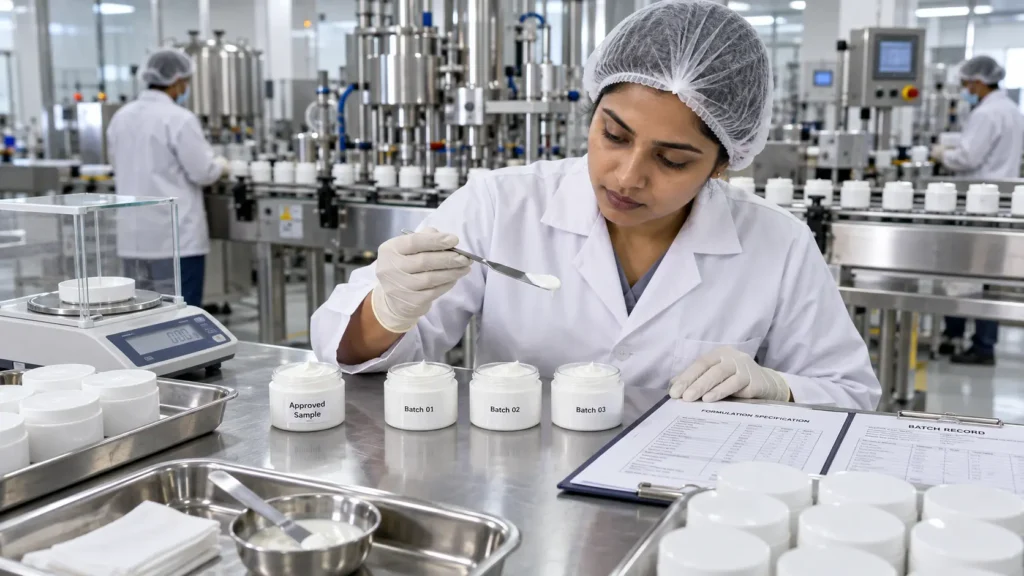
A sample may be just right, but it is still a small batch. Ask who can help if you want to change the texture or adjust the formula. Find out whether the team develops products around your brief or mainly offers existing options with minor changes. Understanding private label cosmetics helps brands evaluate formulation ownership, product customisation and manufacturing partnership models
Ask what happens when the formula moves into full production. The manufacturer should explain how it manages the skincare manufacturing process and works towards consistent results across batches. It is better to understand this before repeat orders begin, rather than after a problem appears.
Quality Checks, Batch Traceability and Production Records
A big facility may look reassuring, but it doesn’t show how work is managed day to day. Ask how quality checks are recorded, how batches are tracked and what happens when results fall outside expectations. Practical answers are more useful than broad promises.
Also ask what production documents you will receive, including batch manufacturing records and quality specifications. You should understand how the manufacturer manages its processes, maintains traceability and keeps records that can help address questions about a batch later.
A suitable partner must do more than make your product once. Look for a team whose processes fit your needs today and can support your brand over time.
Manufacturing Infrastructure and Quality Control Systems
A factory visit or a few photos can tell you something about a manufacturer’s setup, but there’s more to consider. You need to know how the team handles production, whether it can manage your orders and what happens when you need another batch.
Production Capacity and Future Manufacturing Requirements
Production capacity matters when planning both initial orders and future growth. A manufacturer should demonstrate whether its infrastructure can accommodate changing production requirements without compromising consistency.
- Production capacity: Ask about current manufacturing capacity and whether the facility can accommodate larger orders as demand increases.
- Lead times: Understand production schedules, material availability and expected timelines for repeat orders before finalising your launch plans.
- Scalability: Find out whether additional production volumes can be managed without affecting product quality or delivery commitments.
If your launch performs better than expected, you don’t want to start looking for another supplier because your current partner cannot keep up.
Quality Control, Regulatory Compliance and Documentation
Quality procedures and documentation are equally important. Ask how batches are checked, what happens when products fail to meet specifications and which records you can access.
- Quality control: Understand how products are inspected, tested and assessed against approved specifications throughout the manufacturing process. Understanding regulatory compliance for skincare products helps brands assess manufacturing documentation, quality standards and applicable requirements
- Regulatory compliance: Verify applicable manufacturing licences, GMP practices and documentation supporting compliance with Indian cosmetic manufacturing requirements.
- Production documentation: Ask about batch manufacturing records, product specifications and the availability of quality and stability testing reports.
These checks help establish whether the manufacturer’s systems are reliable and transparent. They also provide greater confidence when planning repeat orders and assessing long-term production readiness.
A large facility alone isn’t enough. What matters is whether its processes, quality systems and production capabilities suit your product and the kind of business you’re building.
Stability Testing and Raw Material Sourcing in Skincare Manufacturing
A sample might look fine when you first test it, but you won’t know everything about the product from that alone. It’s worth finding out how the manufacturer checks stability and manages changes in raw material availability before production begins. Both can affect long-term product quality and consistency.
Stability Testing and Ingredient Sourcing Consistency
Ask the manufacturer what stability testing it can support and whether you can see the results. Find out what the tests cover, including changes in texture, colour, odour and product stability over time. Don’t assume these services are included just because a manufacturer offers custom formulation.
Raw materials are another part of the conversation. An ingredient may become difficult to source, or a supplier may change. Either situation could affect production plans and formulation consistency. Ask how the manufacturer assesses replacement ingredients, checks specifications and communicates changes before proceeding with production.
What Should Brands Verify About Stability Testing and Raw Material Sourcing?
Brands should verify available stability tests, documented results, raw material specifications and supplier traceability. They should also confirm how ingredient substitutions are evaluated, whether additional testing is required and how formulation changes are communicated before commercial production begins.
These checks may seem less urgent when you’re focused on launching your product. However, addressing them early can prevent avoidable delays and quality concerns. A reliable manufacturing partner should demonstrate how stability and sourcing decisions support consistent product performance across future batches.
MOQ, Production Timelines and Manufacturing Scalability
Before placing an order, think about how much stock you can realistically sell. Buying more units may lower the cost per product, but it also means committing more capital before knowing how the product will perform. Understanding production terms early helps brands manage inventory, control costs and plan future growth.
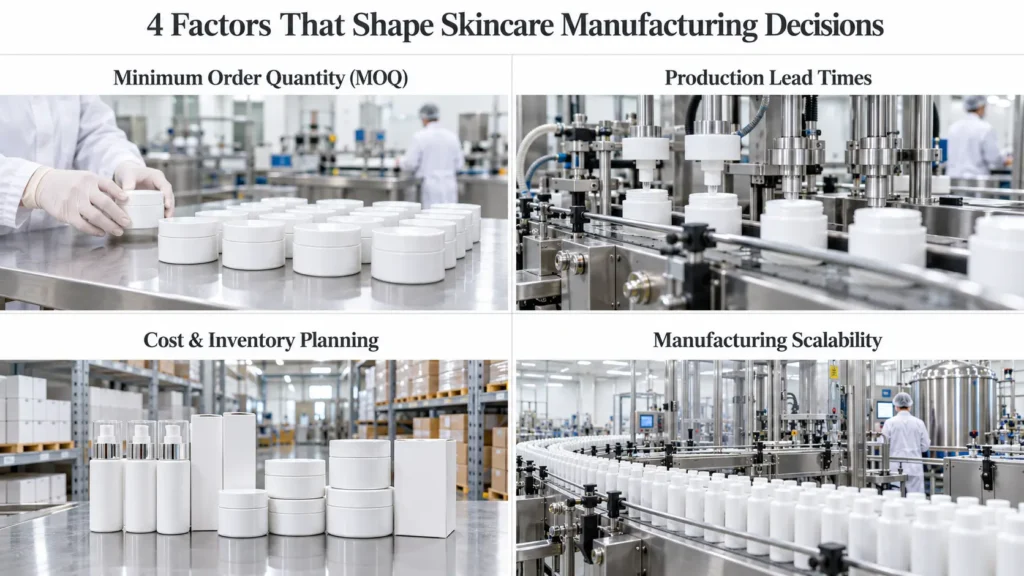
- Minimum Order Quantity (MOQ): Ask about minimum order quantities for each product and packaging format. What suits an established brand may not work for a new venture.
- Production Lead Times: Understand how long manufacturing takes, from raw material procurement to finished product dispatch. This helps plan launches, inventory replenishment and repeat orders.
- Cost and Inventory Planning: Consider manufacturing costs, storage expenses and working capital requirements. Lower unit costs should not come at the expense of excessive inventory.
- Manufacturing Scalability: Check whether the manufacturer can accommodate larger orders, changing demand and future production requirements without compromising quality or delivery schedules. Strong OEM partnerships depend on transparent processes, production reliability, documented quality and shared manufacturing accountability.
You may not know how much you’ll sell in the first few months. The important thing is to discuss these terms before committing your money. A clear understanding of MOQ, production timelines and scalability helps establish a more reliable contract manufacturing partnership.
Also Read:
- Cosmetic Raw Materials: Quality, Stability and Performance
- High-Performance Body Skincare Beyond Moisturisation
Partnering with a Manufacturer for Long-Term Growth
Finding a manufacturer is relatively easy, but choosing the right skincare contract manufacturer requires evaluating its ability to support your brand beyond the first order. Consistent quality, reliable production and scalability matter as your business grows.
Beyond pricing and samples, brands should consider formulation expertise, regulatory compliance, production capabilities and long-term support. A dependable manufacturing partnership helps manage changing product requirements and future demand.
At Beaucience India, our in-house R&D, custom formulation and manufacturing capabilities support brands seeking a reliable private label skincare manufacturer.
Planning your next skincare product launch? Partner with Beaucience India for science-driven formulation, reliable contract manufacturing and scalable production solutions tailored to your brand.
Our Digital Imprints:
Discover the power of personalized skincare with Beaucience India. We offer premium private label skincare products and services designed for established brands, physicians, estheticians, and skincare professionals.
Beaucience is dedicated to helping brands like yours thrive in the skincare market. If you’re ready to explore custom formulations that set your products apart, we invite you to reach out and learn more about our capabilities.
Our commitment to quality ensures exceptional results tailored to your needs. Stay updated with the latest trends and insights in the beauty and cosmetic industry by subscribing to our newsletter.
“Beauty Alchemist” on Beauty and Cosmetic Industry
Join our community on : Instagram | Facebook | LinkedIn
Transform your skincare vision with Beaucience India today!