
Anti-ageing skincare is no longer driven by surface-level correction. There is a clear shift toward cellular skincare, where formulations are designed to support repair, regeneration, and long-term skin function rather than quick, visible results.
At Beaucience India Private Limited, this shift directly informs how we approach private label formulation. In our experience, working with longevity skincare and advanced cellular actives makes one thing clear. Ingredient selection alone is never enough. Performance depends on how those actives are structured, stabilised, and delivered within the formulation system.
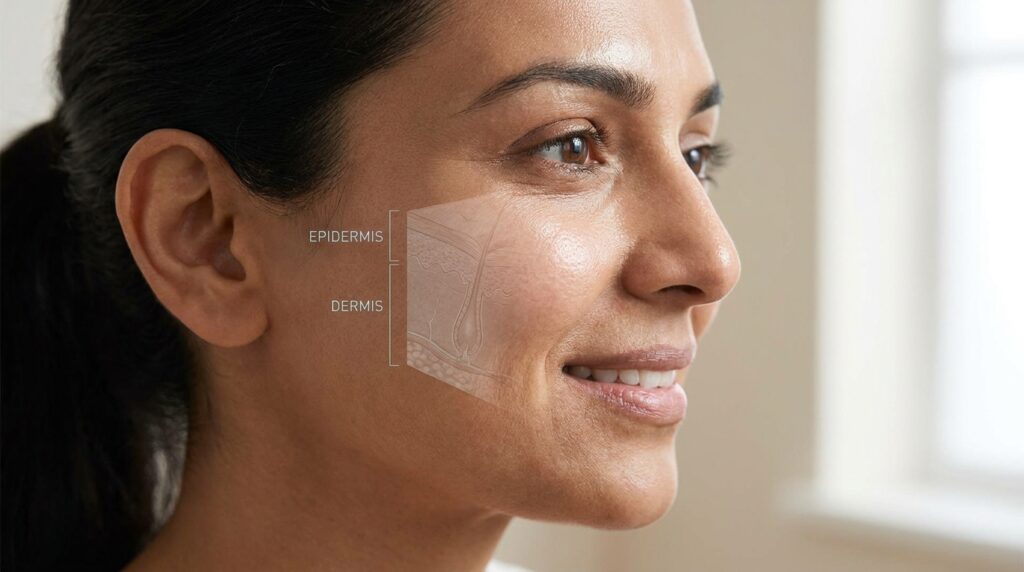
What remains under-addressed in the industry is this gap between ingredient focus and formulation reality. Cellular actives are gaining attention, but often in isolation. The systems that determine their stability, compatibility, and consistency are still not given equal importance.
This is where structured formulation becomes critical. Cellular skincare actives unlock real value only when supported by engineered systems designed to handle their biological complexity and ensure repeat performance at scale.
Also Read:
- Effective Skincare Products: Why Brands Struggle to Deliver Results
- Dandruff Formulation: Why Scalp Imbalance Causes Flakes
Cellular Skincare Actives and Repair Mechanisms in Formulation Systems
To understand why cellular skincare is gaining relevance, it is important to look at how the skin repairs itself at a biological level. Cellular actives are not outcome-driven ingredients. Their performance depends on how well formulation systems support internal skin processes rather than just visible changes.
Exosomes and Intercellular Communication in Cellular Actives
Exosomes function as signaling carriers that help cells communicate during stress, damage, and repair cycles, making them one of the most discussed cellular actives in longevity skincare today.
They operate very differently from conventional ingredients. Instead of delivering immediate visible results, they influence how skin responds over time. This makes them harder to translate into private label formulation without strong system design.
From a formulation standpoint, simply adding exosomes does not ensure efficacy. Their sensitivity to environmental factors means stability, compatibility, and handling within the base system directly impact performance and consistency.
NAD+ Precursors and Cellular Energy Support Systems
NAD+ precursors support cellular energy pathways, which are essential for maintaining repair functions, especially as natural levels decline with age in longevity skincare frameworks.
These ingredients do not create instant results, which often makes them challenging for product positioning. Their impact is gradual, requiring formulations that maintain activity over extended periods rather than short-term delivery.
This shifts formulation thinking. Instead of highlighting a single ingredient, development focuses on how supporting components enable sustained activity, ensuring the active can function effectively within the system.
Cellular actives do not work independently. Their performance is defined by formulation architecture, where stability, delivery, and compatibility determine whether they translate into consistent product outcomes.
Stem Cell Bioactives in Cellular Skincare Formulation Systems
Stem cell-derived bioactives are widely used in cellular skincare, but their real value depends on how they function within a formulation system. Their presence alone does not define performance. Their integration within private label formulation determines whether they deliver meaningful results.
Functional Role of Stem Cell-Derived Bioactives
Stem cell-derived bioactives are often positioned around regeneration, but in topical skincare, their role is more supportive than transformative. They do not rebuild skin directly. Instead, they influence how skin responds to stress, ageing, and environmental exposure over time.
In most formulations, they are paired with hydration and barrier-support ingredients. Their performance is gradual, which can create a gap between expectation and outcome when positioned as standalone hero ingredients.
For brands working in longevity skincare, this creates a clear requirement. Including bioactives is not enough. Their contribution depends on how the surrounding formulation enables stability, compatibility, and sustained activity.
Translating Biological Potential into Formulation Utility
Stem cell bioactives are highly sensitive to formulation conditions. Temperature variation, light exposure, and ingredient interactions can affect their stability and reduce effectiveness over time.
This makes formulation design critical. The base system, supporting ingredients, and stability protocols all influence whether the product maintains consistent performance after production.
The ingredient may carry strong positioning, but without a structured formulation system, its biological potential often fails to translate into reliable product outcomes.
Stability and Delivery Systems in Cellular Skincare Formulation
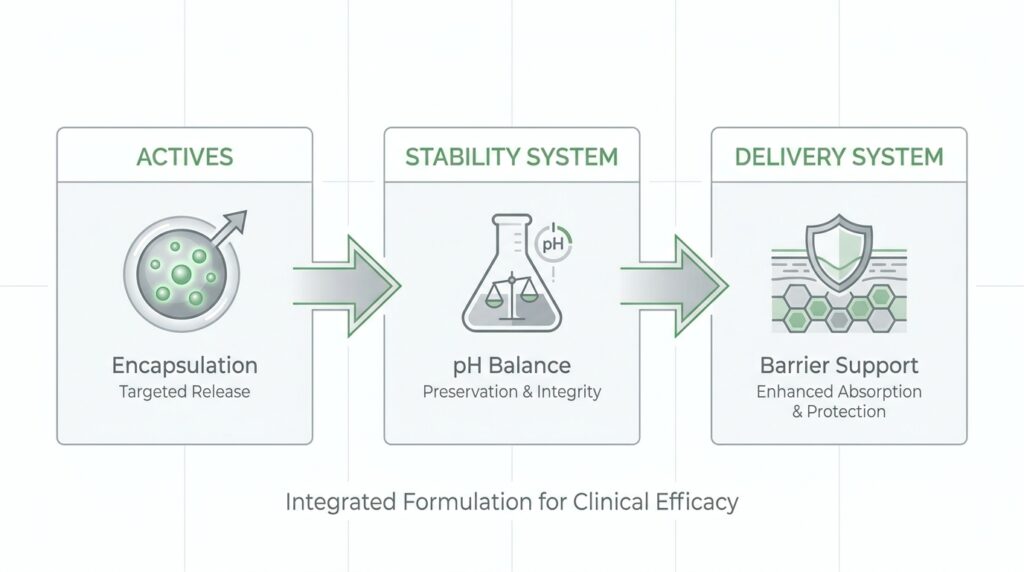
Working with cellular skincare actives depends on how well a formulation maintains stability and enables effective delivery. In private label formulation, performance is defined less by the ingredient and more by how the system protects and activates it.
Why Cellular Actives Need Structured Formulation Architecture
Cellular actives are highly sensitive, which makes formulation architecture critical for maintaining their stability and long-term performance.
Before designing such systems, a few factors must be addressed clearly:
- Temperature sensitivity: even minor fluctuations can degrade active compounds and reduce efficacy over time
- Light exposure risk: certain bioactives lose stability when exposed to light during storage or usage
- Base formulation compatibility: the surrounding ingredients must support, not disrupt, active behaviour
- Packaging influence: airless pumps or opaque containers help preserve active integrity
This is why formulation is no longer a simple blending process. It becomes a controlled system designed to protect ingredient functionality from production to end use.
Delivery Systems and Bioavailability Optimization in Longevity Skincare
Even with stability managed, delivery systems determine whether cellular activesactually perform within the skin.
To improve bioavailability, formulations rely on structured delivery mechanisms:
- Encapsulation systems: protect actives and release them gradually at targeted skin layers
- Controlled release design: ensures sustained activity rather than short-term surface impact
- Penetration balance: optimises absorption without disrupting the skin barrier
- Layer compatibility: allows actives to function alongside supporting ingredients effectively
So, formulation success depends on two factors. Stability ensures the active survives. Delivery ensures it performs. Without both, even advanced ingredients fail to translate into consistent results.
Longevity Skincare in Private Label Formulation Strategy
Longevity skincare is emerging as a high-potential category within cellular skincare, but real differentiation comes from formulation depth, not ingredient selection. For private label formulation, success depends on how well brands translate these actives into stable, scalable systems.
To build a meaningful position in this space, brands need to focus on:
- Cellular repair positioning: shifts narrative from surface results to biological function, strengthening category differentiation
- Early adoption advantage: enables flexible product architecture before the category becomes saturated
- Formulation over hype: ensures cellular actives deliver consistent results rather than remaining marketing claims
- R&D-led development: improves stability, compatibility, and repeat performance across batches
This shifts the conversation from what is used to how it is built. Longevity skincare rewards brands that invest in formulation systems rather than isolated ingredients.
The opportunity is clear, but it is not ingredient-driven. It is formulation-driven. Brands that align cellular skincare with strong R&D and structured systems are more likely to achieve consistent, scalable product performance.

Also Read:
- How Skin Barrier Repair Formulations Restore Dry and Compromised Skin
- Skin Barrier Repair Products for Sensitive Skin
Conclusion
Cellular skincare is reshaping how modern formulations are designed and evaluated. The shift is not about adding advanced cellular actives, but about building systems that ensure stability, compatibility, and consistent performance within private label formulation.
For brands entering longevity skincare, the challenge is structural, not conceptual. These formulations demand deeper R&D, controlled development, and long-term stability planning to ensure results translate beyond initial product claims.
At Beaucience India Private Limited, formulation is approached as a system, not an ingredient story. This enables scalable, high-performance cellular skincare solutions aligned with real market demands.
Partner with Beaucience to develop cellular skincare formulations built for stability, scalability, and consistent performance across your private label product portfolio.
Our Digital Imprints:
Discover the power of personalized skincare with Beaucience India. We offer premium private label skincare products and services designed for established brands, physicians, estheticians, and skincare professionals.
Beaucience is dedicated to helping brands like yours thrive in the skincare market. If you’re ready to explore custom formulations that set your products apart, we invite you to reach out and learn more about our capabilities.
Our commitment to quality ensures exceptional results tailored to your needs. Stay updated with the latest trends and insights in the beauty and cosmetic industry by subscribing to our newsletter.
“Beauty Alchemist” on Beauty and Cosmetic Industry
Join our community on : Instagram | Facebook | LinkedIn
Transform your skincare vision with Beaucience India today!